
How the erbium glass laser works
Fractional lasers treat the skin in a fine grid of microscopic columns, leaving healthy skin between them. The untouched skin heals each column quickly, and the repair process lays down new collagen and elastic fibres, which smooths scars and texture over the following months.
The erbium glass laser works at a wavelength of 1550 nm, which is absorbed by water in the skin, not by pigment. It heats columns deep in the dermis while the surface stays intact, so the skin is pink for a day or two rather than raw. At OrnaSkin Madhur Nagar we use a fractional erbium glass (1550 nm) laser.
- The surface
- Stays intact: the columns of heat are under the surface
- Downtime
- Usually 1–2 days of redness and mild swelling; make-up next day
- Sessions
- A course of several sessions, about a month apart
- Best for
- Shallow scars, enlarged pores, rough texture and fine lines, with little downtime. Lower heat suits brown skin
- The surface
- Tiny open channels through the surface, which heal in days
- Downtime
- About 3–7 days of redness, fine crusting and peeling
- Sessions
- Fewer sessions, spaced further apart
- Best for
- Deeper acne scars and stronger resurfacing, when some downtime is acceptable. Planned carefully for brown skin
Illustration, not to scale; real columns are finer than a hair and cover only a fraction of the skin, which is why it heals quickly. OrnaSkin has both lasers, and the dermatologist chooses or combines them for your skin.
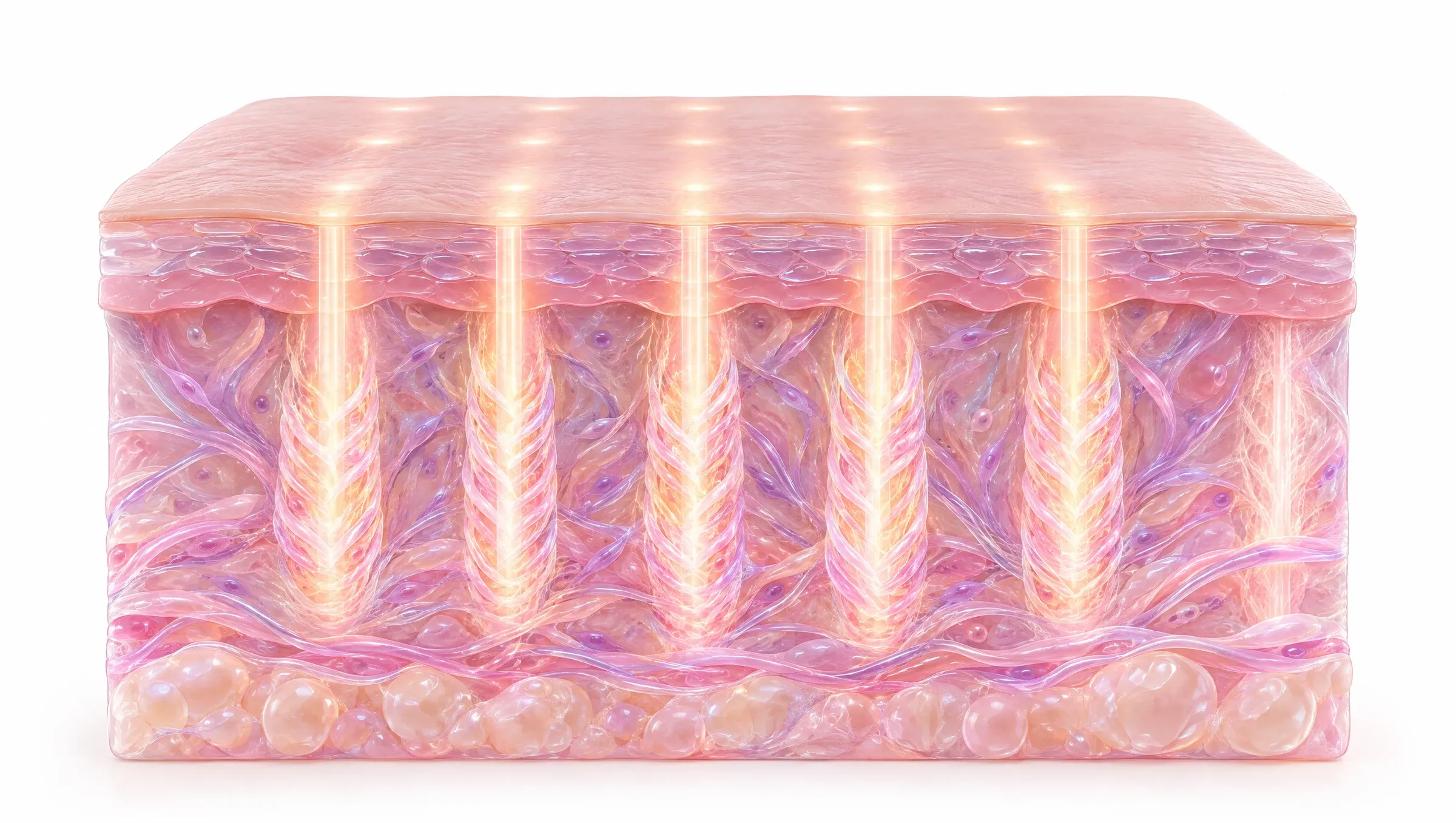
- The laser heats a fine grid of microscopic columns deep in the dermis.
- The surface stays intact, and the untouched skin between the columns heals each one quickly.
- Repair lays down new collagen and elastic fibres over the following months.
What it can help with
- Shallow acne scars and uneven texture.
- Enlarged, open pores.
- Fine lines and crêpey skin, as gentle resurfacing.
- Surgical and other flat scars, and some stretch marks.
- Mild pigmentation and sun damage, together with a pigmentation plan.
Deeper or tethered acne scars usually need more: RF subcision to release them, and fractional CO2 or microneedling radiofrequency, as part of a full acne scar plan.
What results to expect
Days 1–2
Redness, warmth and mild swelling settle.
Week 1
Fine flaking or a slight bronze tint; skin feels smoother.
Through the course
Texture, pores and shallow scars improve session by session.
3–6 months after
Collagen keeps remodelling; final result.
Results are gradual and vary with the type and depth of scars, skin type and how many sessions you have.
Who it suits
Adults with shallow acne scars, enlarged pores, rough texture or fine lines who want improvement with little downtime, including people with brown skin, with suitable settings.
It is avoided during pregnancy, over active acne flares or infection, on a recent tan, and if you have taken isotretinoin recently (unless the dermatologist advises otherwise). Tell us about any history of cold sores, keloids or darkening after injury, and your medicines.
Before, during and after
Before
Avoid sun and tanning for a few weeks. Stop retinoids and exfoliating acids a few days before. If you get cold sores, you may be given a preventive medicine. Pigment-prone skin may be prepared with a cream.
During
The skin is cleansed and numbed for about 30 to 45 minutes. You wear eye protection, and the laser is passed over the area in a few passes with cooling. A face session takes about 30–45 minutes after numbing.
After
- Redness, warmth and swelling for a day or two; a cold pack helps.
- Use a gentle cleanser, a bland moisturiser and sunscreen. Avoid actives, scrubs and saunas for about a week.
- Don’t pick at flaking skin.
Risks and how we minimise them
Common effects are temporary: redness, swelling, dryness, flaking and small, pinpoint marks. Less common are acne flares, cold sore flares and temporary darkening (post-inflammatory hyperpigmentation) in brown skin. Scarring is rare.
We reduce these risks with conservative, fractional settings for Indian skin, preparing pigment-prone skin, cold sore prevention where needed, spacing sessions properly, and strict sun protection.