
What pores are
Pores are the openings of hair follicles on the skin’s surface, each connected to an oil gland. They are most visible on the nose, cheeks and forehead, where oil glands are largest. Pore size is partly genetic, and oily skin, which is common in India’s heat and humidity, tends to have more visible pores.
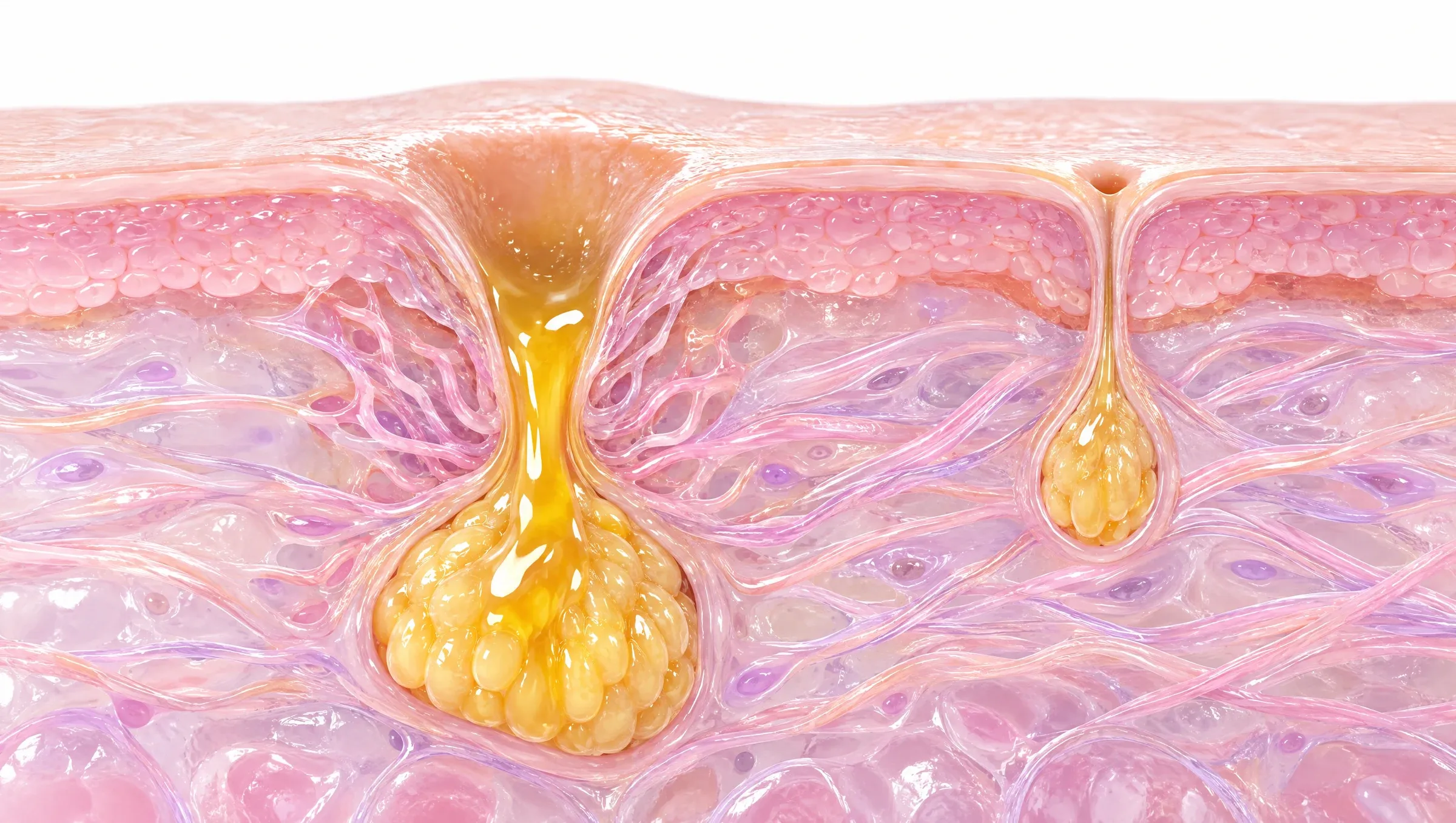
- Each pore is the opening of a hair follicle with its own oil gland.
- Large, active oil glands push more oil through and stretch the opening.
- As collagen around the pore weakens, its walls lose support and it looks wider.
Why do pores on the face look large?
Oiliness
- What’s happening
- Large, active oil glands push more oil through the pore, stretching its opening.
- Common in
- Teenagers and young adults, oily and acne-prone skin, hot and humid weather.
- What helps
- Gentle oil control: salicylic acid, niacinamide, retinoids, light peels and carbon laser peels.
Clogging
- What’s happening
- Oil and dead cells collect in the pore as blackheads and whiteheads, which makes it look wider and darker.
- Common in
- Oily skin, heavy cosmetics and irregular cleansing.
- What helps
- Regular chemical exfoliation, non-comedogenic products, medi-facials and extraction.
Ageing & sun
- What’s happening
- Collagen around each pore weakens, so its walls lose support and the opening sags into a teardrop shape.
- Common in
- From the thirties onwards, more with sun damage.
- What helps
- Sunscreen, retinoids, and collagen-building treatments such as fractional lasers and radiofrequency.
After acne
- What’s happening
- Inflamed acne damages the pore walls, leaving wider openings and shallow scars.
- Common in
- People who had moderate or severe acne.
- What helps
- Treating active acne first, then fractional lasers or microneedling radiofrequency.
Illustrations, not to scale. Most people have a mix of these, which is why combined care works best.
What doesn’t work
Pores can’t be “opened” with steam or “closed” with cold water, and they don’t breathe. Steam, harsh scrubs, toothpaste and alcohol-heavy toners irritate the skin and can increase oil production. Pore strips give a temporary result and can irritate.
How to reduce the look of open pores
- Cleanse twice a day with a gentle cleanser; foaming gels suit oily skin.
- Use a salicylic acid product a few times a week, or a retinoid at night.
- Choose non-comedogenic, oil-free moisturisers and sunscreens.
- Remove make-up fully at night.
- Wear sunscreen daily to protect collagen.
When to see a dermatologist
See a dermatologist if pores come with acne, blackheads that keep coming back, or scarring, or if a good routine hasn’t helped after two to three months. The doctor works out which causes are at play and combines home care with in-clinic treatment.
How OrnaSkin treats open pores
At OrnaSkin Madhur Nagar, pore plans combine oil control and home care with in-clinic treatments: carbon laser peels, chemical peels and hydra facials for oil and clarity, and the erbium glass laser or RF skin tightening to firm the skin around pores. Pores widened by acne scars are treated as part of acne scar treatment.