
First, find out why
Hair fall is a symptom, not a diagnosis, and the right treatment depends entirely on the cause. Most people have one or more of these:
- Genetic (pattern) hair loss. In men, a receding hairline and thinning crown; in women, a widening parting and thinner hair on top. Follicles slowly shrink under the influence of hormones.
- Sudden heavy shedding (telogen effluvium), two to three months after a fever, illness, surgery, childbirth, crash dieting or a stressful period. Our post on hair fall in women explains the common causes in women, and hair fall in the monsoon covers shedding after monsoon fevers.
- Low iron, vitamin D or B12, and thyroid problems, which are common and easy to miss.
- Hormonal causes such as PCOS, often with acne, irregular periods or facial hair.
- Scalp conditions such as dandruff, psoriasis or fungal infection, and patchy hair loss (alopecia areata).
- Hair-care damage from tight hairstyles, heat and chemical treatments.
At your consultation, the dermatologist asks about your health, diet, medicines and family history, examines your scalp closely, often with magnification, and orders blood tests when they will change the plan.
How we treat it
Most plans combine three parts, adjusted to the cause.
1. Treat the cause
Correcting deficiencies, managing thyroid or hormonal problems, treating dandruff or scalp inflammation, and changing harmful hair habits. For telogen effluvium, this alone often lets hair recover.
2. Medical treatment
For pattern hair loss, prescription treatments such as minoxidil, and for some men finasteride, are the foundation, because they protect the follicles that are still working. Your dermatologist explains the expected benefit and possible side effects before you start, so you can decide.
3. In-clinic treatments
These strengthen weaker follicles and are usually added for pattern thinning or slow recovery:
- Meso-PRP (Meso-Hair). Platelet-rich plasma from your own blood, combined with mesotherapy, injected into thinning areas to support the follicles. A course is at least 10 sessions of about 45 minutes, with no downtime, then two or three maintenance sessions a year.
- Exo-Hair. An exosome hair treatment: exosomes applied to the scalp to support follicle repair, as a course of six sessions.
- Exo-Meso Hair. Exosomes with mesotherapy, as a course of 10 sessions.
The dermatologist suggests which, if any, suits you. Not everyone needs an in-clinic treatment.
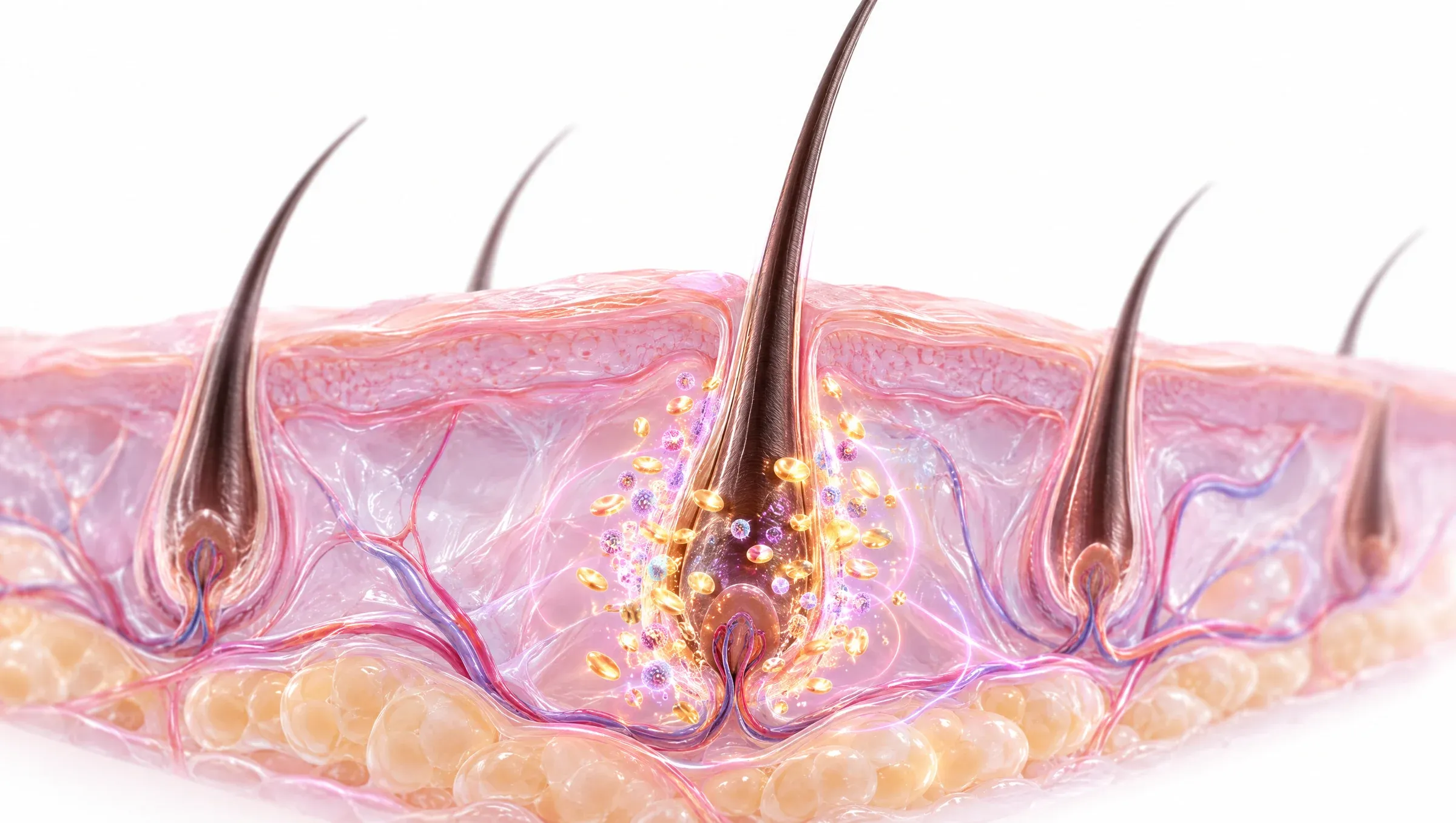
- Your own blood is spun to concentrate the platelets.
- Placed in the scalp, they release growth factors around the follicles.
- These signals can support thinning follicles; changes build over months.
PRP is one part of a plan, added to medical treatment once the cause is known.
What results to expect
Weeks 1–6
The cause is being corrected. Some people shed a little more at first as new growth pushes old hairs out.
Months 2–3
Shedding slows down noticeably.
Months 4–6
New, finer hairs thicken; the parting or crown looks fuller in photos.
Ongoing
Maintenance keeps the gain; stopping treatment lets genetic thinning resume.
Hair grows about a centimetre a month, so judge progress over months, not weeks. Results vary from person to person.
How we photograph progress and share results, only with written consent, is explained on our results page.
Who it suits
Men and women with increased shedding, thinning or a receding hairline, ideally before large areas become bald, because treatment works on follicles that are still alive. People with recent heavy shedding after illness, childbirth or stress also benefit from a proper assessment.
If you have been looking for a hair specialist in Rajkot, a dermatologist is the right doctor to see first: hair and scalp disorders are part of dermatology. Hair loss treatment for women often starts with blood tests for iron, thyroid and hormones, because these causes are common in women.
Some in-clinic treatments are postponed during pregnancy and breastfeeding, and PRP may not suit people with certain blood disorders or on blood-thinning medicines.
Before, during and after Meso-PRP
Before
Wash your hair on the day, eat normally and drink water. Tell us about any medicines, especially blood thinners or painkillers such as aspirin.
During
A small blood sample is taken from your arm and spun to concentrate the platelets. The scalp is cleaned and numbed, and the treatment is injected into the thinning areas with fine needles. The whole session takes about 45 minutes.
After
Mild tenderness or a dull ache in the scalp can last a day. Avoid washing your hair, hair colour and heavy exercise for the rest of the day. You can return to work straight away.
Risks and how we minimise them
In-clinic hair treatments are generally well tolerated. Possible effects include temporary scalp tenderness, swelling, small bruises or headache, and rarely infection. We use sterile, single-use kits and numb the scalp. Medicines are prescribed only after explaining their possible side effects, and we review you regularly so the plan can change if your hair or health does.