
How a chemical peel works
A peel is a carefully measured acid solution applied to clean skin for a few minutes. It loosens the bonds between dull, dead surface cells so they shed faster, unclogs pores, and prompts the skin to renew itself. Some peels also calm oil and inflammation or slow pigment production.
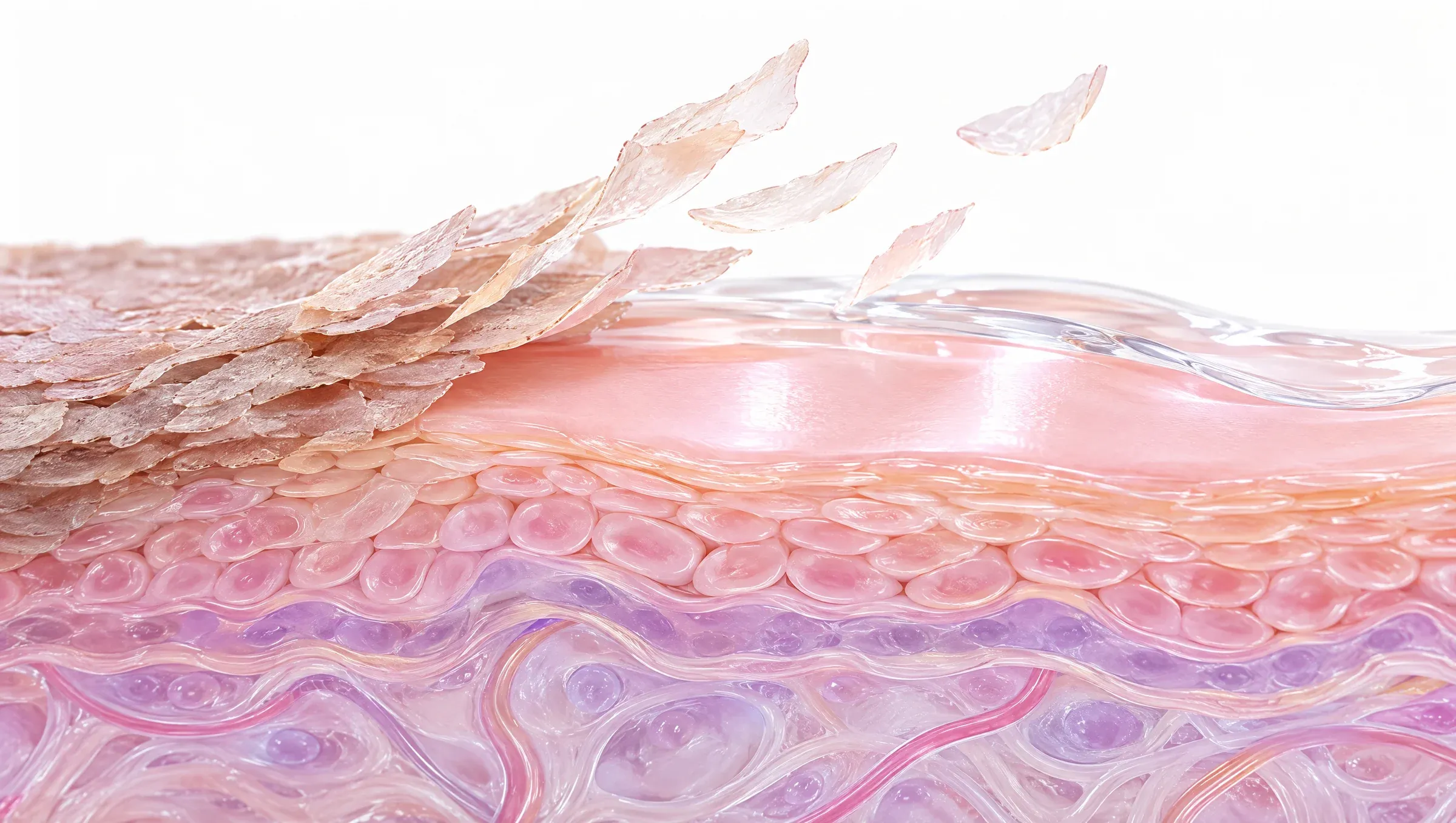
- A measured acid solution is applied for a set time.
- It loosens the bonds between dull surface cells, which shed over the next days.
- Fresher, more even skin shows through; the depth depends on the peel.
The depth a peel reaches decides both what it can do and how much downtime it brings:
- Reaches
- The outer skin (epidermis)
- Typical agents
- Glycolic, salicylic, lactic and mandelic acid
- Used for
- Acne, blackheads, acne marks, dull skin, mild pigmentation and melasma
- Downtime
- None to 2–3 days of light flaking
- On Indian skin
- The type dermatologists use most on Indian skin: effective with a low risk of darkening when chosen well.
- Reaches
- Through the epidermis into the upper dermis
- Typical agents
- Stronger TCA, or combinations such as Jessner’s solution followed by TCA
- Used for
- Stubborn pigmentation, sun damage and some shallow scars
- Downtime
- About 5–7 days of browning and peeling
- On Indian skin
- Used selectively and carefully on brown skin, with skin preparation, because the risk of darkening is higher.
- Reaches
- Into the deeper dermis
- Typical agents
- Phenol-based peels
- Used for
- Deep wrinkles in fair skin
- Downtime
- Weeks, with a long healing period
- On Indian skin
- Rarely suitable for Indian skin. Lasers and other treatments are usually safer for these concerns.
Illustration and general guide. The agent, strength and number of layers are chosen for your skin by the dermatologist; the same acid can act superficially or more deeply depending on its strength.
What a chemical peel for the face can help
- Acne and blackheads. Salicylic acid dissolves oil inside pores, so it suits oily, acne-prone skin. See acne treatment.
- Acne marks and post-inflammatory darkening, the brown spots left after pimples.
- Pigmentation and melasma, as part of a wider plan with sunscreen, creams and sometimes laser toning. See pigmentation and melasma.
- Dull, uneven or rough skin, and tan on the face, neck and hands.
- Fine lines and early sun damage, with gradual, modest improvement.
- Body concerns such as acne on the back and chest, or darker skin on the neck, underarms and elbows.
Deep acne scars, sagging skin and deep wrinkles respond better to other treatments, such as acne scar treatment and HIFU.
Choosing the right peel
Common superficial peels include glycolic acid (all-round brightening), salicylic acid (oily and acne-prone skin), lactic and mandelic acid (gentler, for sensitive or darker skin) and combination peels for pigmentation. At OrnaSkin the dermatologist chooses the agent and strength for each visit, based on your skin type, the problem and how your skin responded last time.
Over-the-counter peels and strong peels done outside a medical setting are a common cause of burns and dark patches on Indian skin. A medical peel is supervised from start to finish and stopped at the right moment.
What results to expect
After 1–2 sessions
Skin feels smoother and looks brighter; oil and blackheads settle.
Sessions 3–4
Acne marks and patches start fading; fewer breakouts.
End of course
More even tone and texture. Melasma usually needs maintenance.
Ongoing
Sunscreen and a simple routine hold the result; occasional top-up peels if needed.
Sessions are usually two to three weeks apart. Results vary with the concern, your skin type and daily sun protection.
Who it suits
Most skin types, including Indian skin, for acne, marks, pigmentation and dullness. Teenagers with acne can have gentle peels too.
Peels are postponed or adjusted if you have active cold sores, a skin infection, sunburn, eczema on the area, very sensitive skin, or have taken isotretinoin recently. Tell us if you are pregnant or breastfeeding, if you tend to get keloids or dark marks after injuries, or if you have reacted to aspirin or other acids.
Before, during and after
Before
For some peels, especially for pigmentation, you may use a prescribed cream for two to four weeks to prepare the skin. Stop retinoid creams and scrubs two to three days before, and avoid waxing, threading, bleaching and strong sun on the area.
During
The skin is cleansed and degreased, delicate areas such as the corners of the eyes and nose are protected, and the peel is applied in even layers. You may feel tingling, warmth or mild stinging, which a small fan eases. The dermatologist watches the skin closely, then neutralises or removes the peel at the right time, and applies a calming cream and sunscreen. The visit takes about 20–30 minutes.
After
Mild redness for a few hours is usual, and light flaking may follow for two or three days. Use a gentle cleanser, moisturiser and sunscreen, and do not pick or peel off flakes. Avoid scrubs, retinoids, waxing and saunas until your skin has settled, usually about a week.
Risks and how we minimise them
Superficial medical peels are low risk. Possible effects are redness, stinging, dryness, a short acne flare and, less often, temporary darkening, a cold sore flare or, rarely, a burn or lasting mark. We reduce these by choosing the peel and strength for your skin type, preparing the skin when needed, timing each application closely, and giving clear aftercare with strict sun protection.