
What dark spots are
Skin colour comes from melanin, made by pigment cells in the outer skin. When those cells are stimulated, by sun, inflammation, friction or hormones, they make more melanin in one area, which shows as a spot, patch or uneven tone. Doctors call this hyperpigmentation.
Brown and Indian skin has active pigment cells, which protect well against sunburn but react quickly to any irritation. That is why dark marks after pimples, rashes or waxing, uneven tan and dark patches are so common, and why gentle treatment matters: harsh treatment can itself cause more pigmentation.
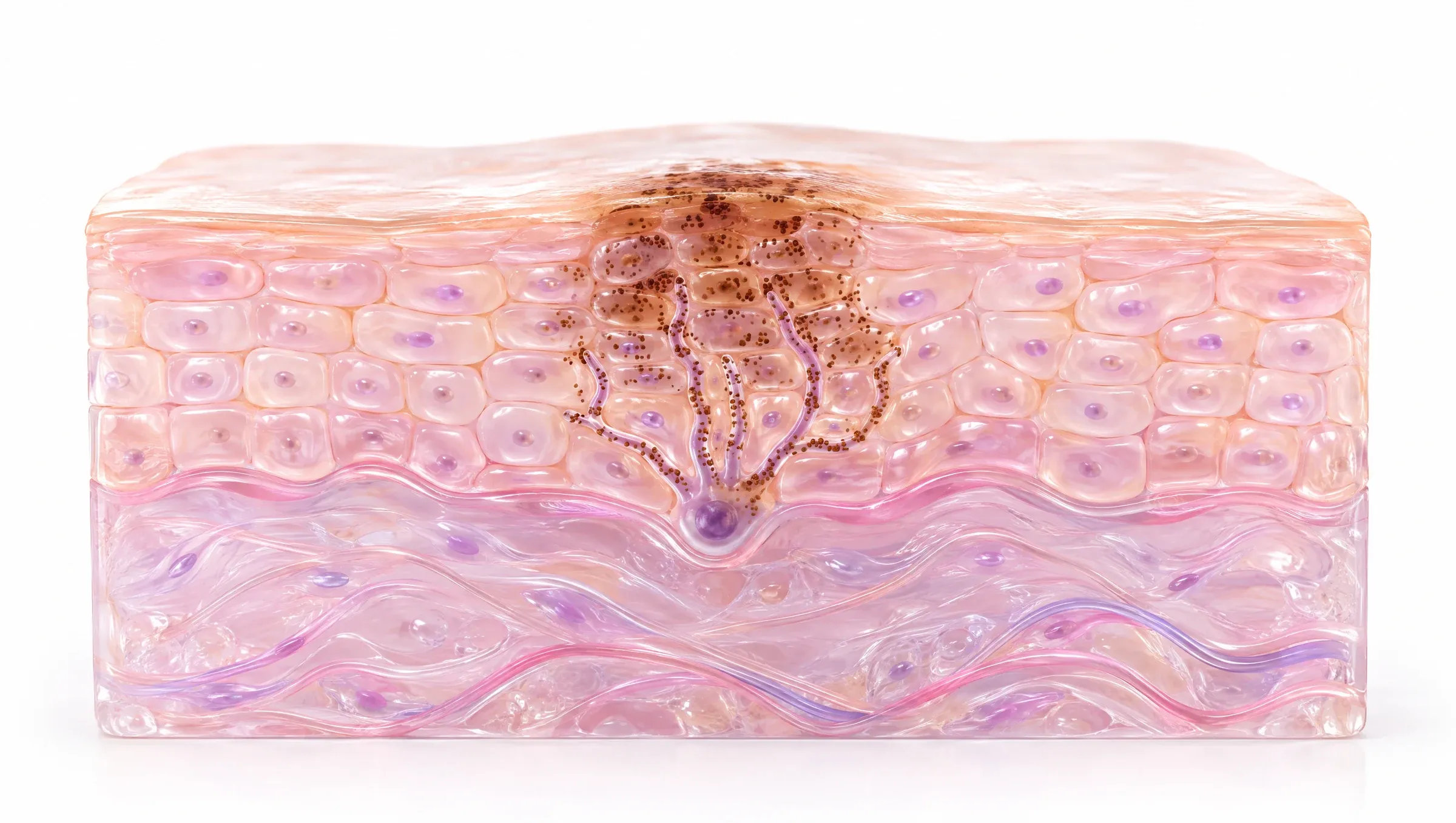
- A pimple, rash, sun or friction stimulates the pigment cells.
- They make more melanin in that one area.
- The extra pigment shows as a mark, which fades slowly with protection and gentle treatment.
Where are your dark spots?
The location is a strong clue to the cause, and to whether anything else should be checked. For spots on the face, our post chehre ke daag: which kind of dark spot do you have? compares tan, acne marks, freckles, sun spots, melasma and deeper grey spots side by side.
Face
- Common causes
- Sun spots, marks after pimples (post-inflammatory hyperpigmentation), freckles, tan, melasma and, on the cheekbones, Hori’s naevus.
- Worth checking
- Whether it is melasma, which needs a gentler plan, and any single spot that is changing.
- What helps
- Daily sunscreen, prescription creams, peels and pigment lasers chosen for the type of spot.
Neck & underarms
- Common causes
- Acanthosis nigricans (dark, velvety skin), friction, shaving, deodorant irritation.
- Worth checking
- Weight, blood sugar and insulin resistance, and PCOS in women, since these often drive acanthosis nigricans.
- What helps
- Treating the underlying cause, gentle creams and peels, and laser in some cases. Scrubbing makes it worse.
Elbows & knees
- Common causes
- Friction, pressure from leaning or kneeling, and dry, thickened skin.
- Worth checking
- Usually nothing; occasionally eczema or acanthosis nigricans.
- What helps
- Moisturisers with urea or lactic acid, less friction, and lightening creams or peels.
Lips
- Common causes
- Sun, smoking, lip-licking, reactions to lipstick or toothpaste, and some medicines.
- Worth checking
- Allergic reactions to lip products; new dark spots on the lips should be examined.
- What helps
- Lip sunscreen, stopping triggers, gentle lightening care and, for some, laser toning.
Under the eyes
- Common causes
- Genes, extra pigment, thin skin showing vessels, hollows that cast shadows, and rubbing from allergies.
- Worth checking
- Which kind you have: pigment, vessels or a hollow, as each needs different treatment.
- What helps
- Sunscreen and gentle creams for pigment; peels or laser toning; skin boosters or filler for hollows.
Illustrations, not to scale. A dermatologist confirms the type, often with a dermatoscope, before suggesting treatment.
The main causes of pigmentation on the face
- Sun exposure. Ultraviolet and visible light darken existing spots, cause tan and, over years, sun spots. It is the most important factor to control.
- Inflammation. Pimples, eczema, insect bites, burns, waxing and harsh products all leave marks in brown skin.
- Hormones. Pregnancy, the contraceptive pill and conditions such as PCOS drive melasma and acanthosis nigricans.
- Friction. Tight clothing, scrubbing, leaning on elbows and shaving darken skin over time.
- Genes. Freckles, dark circles and melasma often run in families.
- Medicines and products. Some medicines, perfumes and hair dyes make the skin darken with light or cause allergic marks; repeated mild reactions to hair dye or black mehndi can darken the forehead and temples. On the lips, lipsticks, balms and toothpastes are common culprits; see dark lips.
When to see a dermatologist
See a dermatologist if spots are spreading or not fading after a few months of sunscreen and gentle care; if you have dark, velvety skin on the neck or underarms, which can point to an underlying cause (our post on dark neck and underarms explains which tests help); before starting any strong cream or procedure; and promptly for any single spot that is new, growing, changing colour or bleeding.
Looking after pigment-prone skin
- Wear a broad-spectrum sunscreen of SPF 30 or more every day, all year, and reapply outdoors. Tinted sunscreens add protection from visible light. See how to choose a sunscreen for Indian skin.
- Treat acne and rashes early, and don’t pick, scrub or wax inflamed skin.
- Use gentle, fragrance-free products; avoid bleaching creams and unprescribed steroid creams.
- Be patient: pigment fades slowly, over weeks to months.
How OrnaSkin treats dark spots
At OrnaSkin Madhur Nagar, the dermatologist identifies the type and depth of pigmentation first, then plans sun protection and creams with, where useful, chemical peels, laser toning or the pico laser. For brown patches on both cheeks, see melasma; for marks after acne, see acne scars and marks. Sessions and typical costs are on the pigmentation and melasma treatment page.