
Why stretch marks form
Stretch marks are fine scars in the dermis, the skin’s supporting layer. When skin stretches quickly, the collagen and elastic fibres that hold it together tear and straighten, and the skin above becomes thinner. Hormones that make the fibres more fragile, such as those in pregnancy, puberty and with steroid medicines, make this more likely. Genes play a strong part: if your mother had stretch marks in pregnancy, you are more likely to get them too.
Stretch marks start red and turn white. New marks are pink, red or purple, sometimes slightly raised and itchy. Over months to years they turn pale, silvery and slightly sunken.
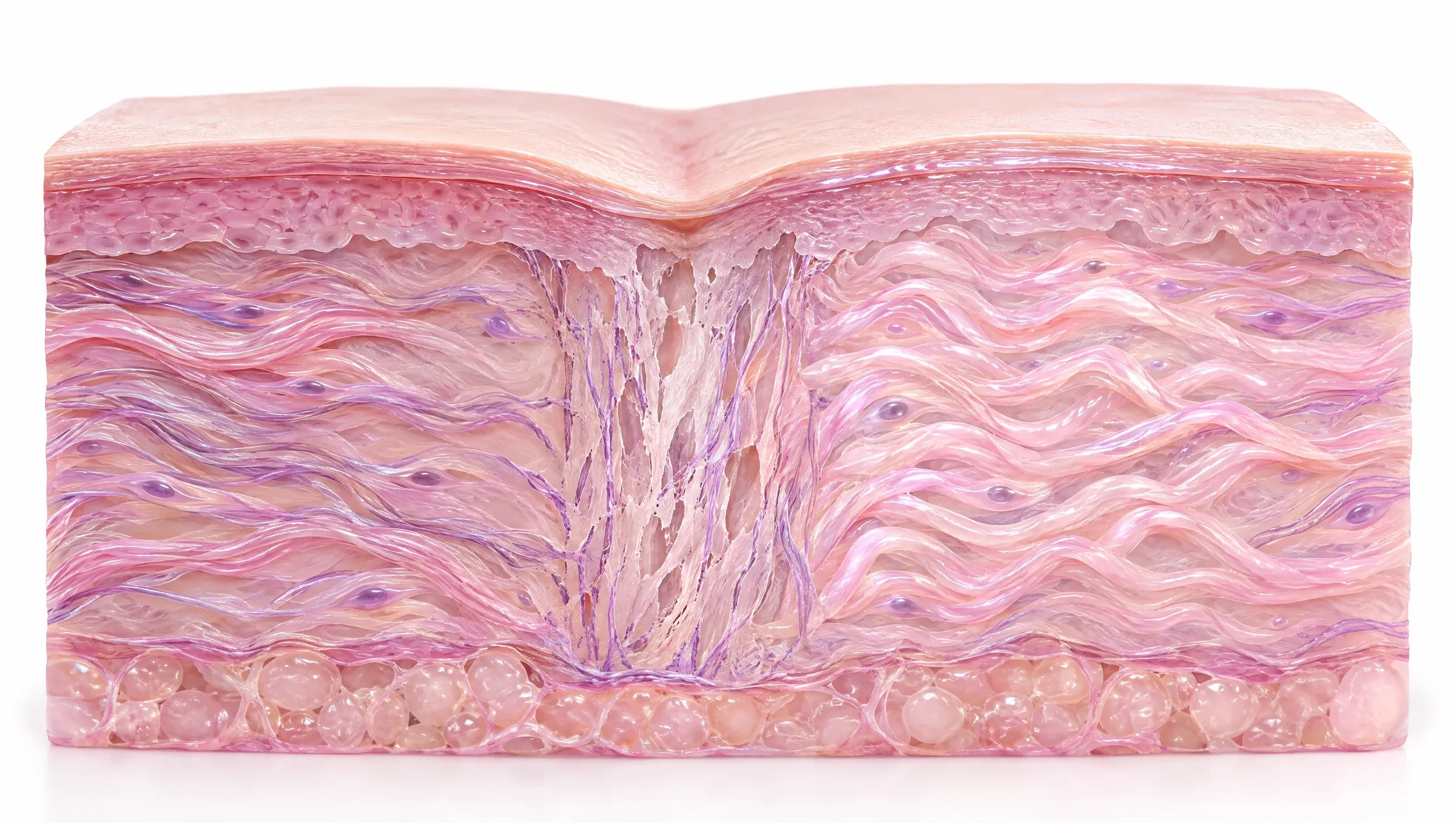
- Skin stretches faster than its fibres can adapt.
- Collagen and elastic fibres in the dermis tear and straighten, and the skin above thins.
- Collagen-building treatment encourages new fibres to form over a course.
What caused yours?
In pregnancy
- Where
- Abdomen, breasts, hips and thighs, usually in the later months.
- Why
- Rapid stretching plus pregnancy hormones; more likely with a family history, a younger age in pregnancy and larger babies or twins.
- Good to know
- Moisturise for comfort; most treatments wait until after delivery and, for some, after breastfeeding.
In puberty
- Where
- Hips, thighs, buttocks, breasts, and the lower back in growing teens.
- Why
- Growth spurts and the hormone changes of puberty.
- Good to know
- Very common and harmless; they fade with time and can be treated once growth settles.
With weight or muscle gain
- Where
- Abdomen, upper arms, shoulders, thighs and the chest.
- Why
- Fast weight gain, or fast muscle gain in bodybuilding.
- Good to know
- Gradual changes in weight lower the risk of new marks.
With steroids or illness
- Where
- Can be widespread: abdomen, thighs, arms, armpits and groin.
- Why
- Long-term steroid creams or tablets, or rarely a hormone condition such as Cushing’s syndrome.
- Good to know
- Wide purple marks without an obvious cause need a medical check. Never stop prescribed steroids suddenly.
Illustrations, not to scale. Whatever the cause, marks respond best while they are still red or purple.
Can you prevent stretch marks?
Not completely, because genes and hormones play a big part. These steps may help:
- Keep weight changes gradual where you can.
- Moisturise the skin daily in pregnancy; it eases itching and dryness. Our post on skincare in pregnancy covers which products are fine and which to pause.
- Avoid using strong steroid creams over large areas without medical advice.
- Treat new marks early, while they are still red.
When to see a dermatologist
See a dermatologist when new marks appear and you would like to treat them early, when older marks bother you, or promptly if wide, purple marks appear without an obvious reason. The doctor can confirm the cause and plan treatment around pregnancy and breastfeeding.
How OrnaSkin treats stretch marks
At OrnaSkin Madhur Nagar, stretch marks are treated with collagen-building sessions such as microneedling radiofrequency and fractional laser, planned over a course and adjusted to your skin tone. See stretch marks treatment for how it works, sessions and typical cost.