
Why skin on the face loosens and sags
Firm skin depends on several layers working together: the collagen and elastic fibres of the dermis, the fat pads beneath it, a deeper supporting layer of connective tissue and muscle (the SMAS), and the bones of the face. With age, all of them change. Collagen and elastin thin, fat pads shrink and slide down, the support layer loosens and bone slowly recedes. Gravity then shows the effect: a softer jawline, jowls, deeper folds and loose skin on the neck.
Sun damage, smoking, large weight changes and genes speed this up.
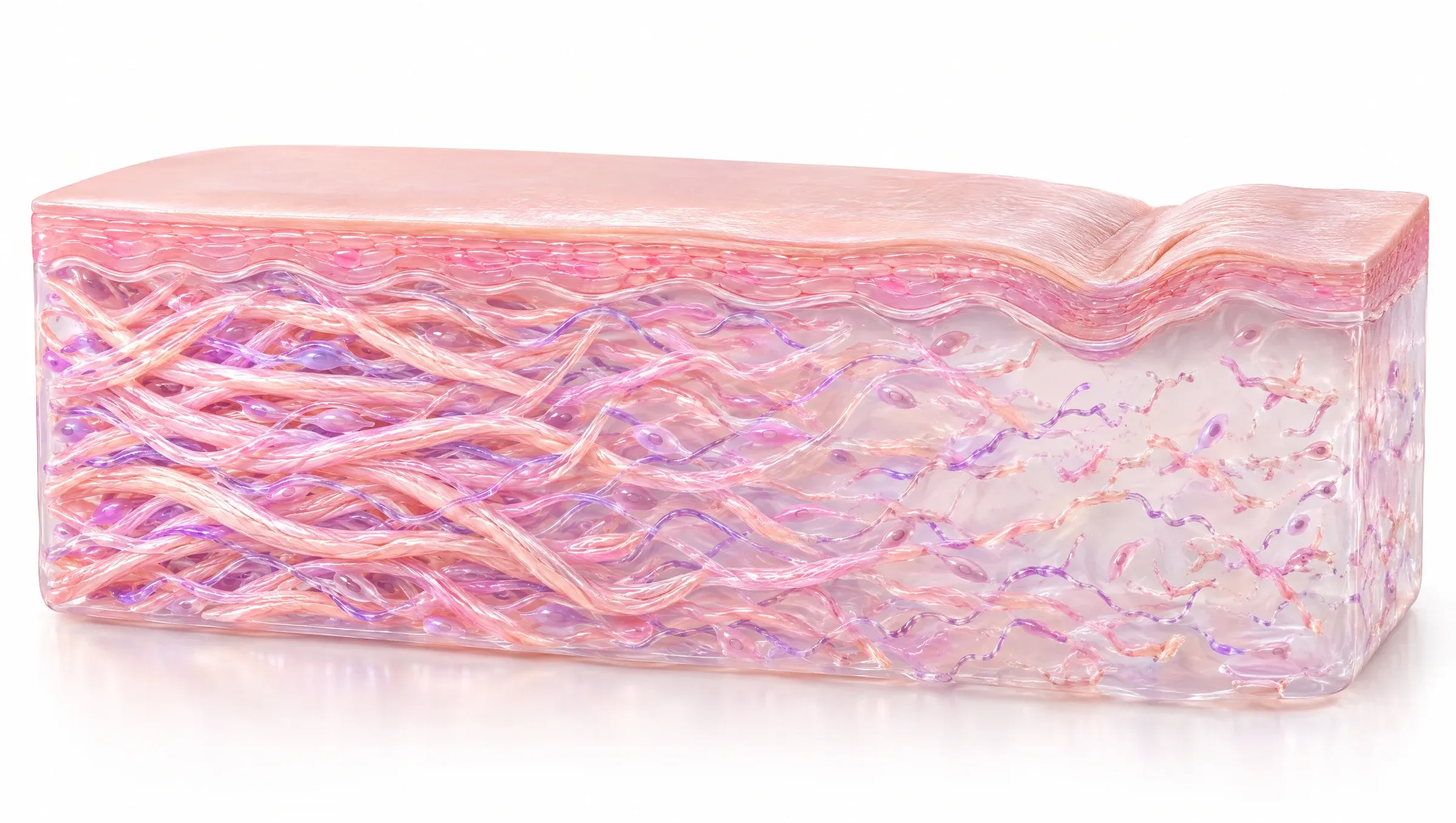
- Firm skin: a dense, springy network of collagen and elastic fibres.
- With age and sun, the fibres thin and break up.
- The skin loses support and no longer springs back fully.
Where does it show?
Jawline & jowls
- What you see
- A less defined jawline, with small pouches (jowls) forming along it.
- What’s behind it
- Loosening of the deeper support layer and descent of fat from the cheeks.
- What can help
- HIFU for deeper lift, radiofrequency for skin tightening, and filler along the jaw or chin for support.
Under the chin
- What you see
- Fullness or loose skin under the chin, sometimes called a double chin.
- What’s behind it
- A mix of fat, loose skin and a short chin, sometimes genetic.
- What can help
- HIFU and radiofrequency for laxity; chin filler where a small chin makes it worse.
Cheeks & smile lines
- What you see
- Flatter cheeks, deeper smile lines and a tired look.
- What’s behind it
- Loss of volume in the cheek fat pads, with the skin moving down.
- What can help
- Cheek filler to restore support, plus tightening and skin boosters for skin quality.
Neck
- What you see
- Horizontal neck lines, crêpey skin and loose bands.
- What’s behind it
- Thin neck skin, sun damage and loosening of the neck muscle.
- What can help
- Radiofrequency, HIFU and skin boosters for mild changes; marked bands may need a surgical opinion.
Illustrations, not to scale. The right treatment depends on how much of the change is loose skin, lost volume or deeper laxity.
What non-surgical treatment can and can’t do
Non-surgical tightening works best for early to moderate sagging in people who want a gradual, natural improvement with little or no downtime. It typically gives a firmer, better-defined look that builds over two to three months. It does not give the result of a surgical facelift, and it doesn’t remove large amounts of loose skin. A good consultation is honest about this: if surgery would serve you better, you will be told.
Preventing and slowing sagging
- Wear sunscreen every day; sun damage is the biggest preventable cause of skin ageing.
- Don’t smoke.
- Keep your weight stable and lose weight gradually if needed.
- Use a retinoid at night and a good moisturiser to support skin quality.
- Start maintenance treatments early if sagging runs in your family.
When to see a dermatologist
When sagging bothers you, a consultation helps you understand which layers are involved, what each option can realistically achieve, and the cost and timeline, before spending on devices or creams. Our post on skin tightening at home sorts out which home products and gadgets help and which don’t.
How OrnaSkin treats sagging skin
At OrnaSkin Madhur Nagar, tightening plans combine HIFU for the deeper support layer, RF skin tightening on the EndyMed PURE for the skin, dermal fillers where volume has been lost and skin boosters for skin quality, planned for your face and reviewed over time. If you’re weighing these against each other, see HIFU vs Botox, RF, fillers and MNRF.