
Marks or scars?
After acne settles, two quite different things can be left behind, and it matters which you have. Marks are flat colour changes that usually fade with time. Scars are changes in the structure of the skin, either dents where collagen was lost or raised bumps where too much was made. Marks respond to sun protection, creams, peels and gentle lasers; scars need treatments that rebuild or remodel the skin.
Brown marks
- How to tell
- Flat brown or dark patches where pimples were. You can’t feel them.
- Why it happens
- Inflammation makes pigment cells produce extra melanin (post-inflammatory hyperpigmentation), very common in Indian skin.
- Fades on its own?
- Usually, over months to a year or more, if acne is controlled and skin is protected from the sun.
- What helps
- Daily sunscreen, prescription creams, chemical peels and gentle laser toning.
Red marks
- How to tell
- Flat pink, red or purple spots, more obvious in fair or lighter skin.
- Why it happens
- Small blood vessels widen during healing (post-inflammatory erythema).
- Fades on its own?
- Usually, slowly. Picking and scrubbing keep them red for longer.
- What helps
- Gentle skincare, sunscreen, and vascular-friendly laser or light treatments where suitable.
Dents (atrophic scars)
- How to tell
- You can see and feel a dip, clearer in side lighting. Rolling (soft, wave-like), boxcar (sharp edges) or ice-pick (narrow and deep).
- Why it happens
- Deep inflammation destroyed collagen, and the skin healed with less support underneath; in rolling scars, bands also tether the skin down.
- Fades on its own?
- No. These are permanent without treatment.
- What helps
- Fractional laser, microneedling radiofrequency, subcision for rolling scars, focal treatment for ice-pick scars, often combined.
Raised scars & keloids
- How to tell
- Firm, raised bumps, often on the jawline, chest, shoulders and back. Keloids grow beyond the original spot and may itch.
- Why it happens
- The skin overproduces collagen while healing; some people are prone to this.
- Fades on its own?
- Sometimes they flatten a little, but keloids tend to persist or grow.
- What helps
- Injections into the scar, silicone, and laser in some cases. Early treatment works best.
Illustrations, not to scale. Most people have more than one of these; the dermatologist examines your skin in different lights to map them.
Why acne scars form
Every inflamed pimple is a small wound. In most spots the skin repairs itself completely. But when inflammation is deep, lasts a long time, or is made worse by squeezing, the follicle wall can rupture into the dermis and the collagen around it is damaged. As it heals, the skin may lay down too little new collagen, leaving a dent, or too much, leaving a raised scar.
The biggest risk factors are:
- Deep, painful acne: nodules and cysts scar far more often than surface pimples.
- Delay in treatment: the longer inflamed acne lasts, the more scarring it can cause.
- Picking and squeezing, which push inflammation deeper.
- Genes: scarring tends to run in families, as does a tendency to keloids.
The three main types of dented scars
- Rolling scars have soft, sloping edges and give the skin a wavy look in side light. Bands under the skin pull them down.
- Boxcar scars are round or oval with sharp, steep edges, like small craters. They may be shallow or deep.
- Ice-pick scars are narrow and deep, like large open pores, and reach far into the dermis.
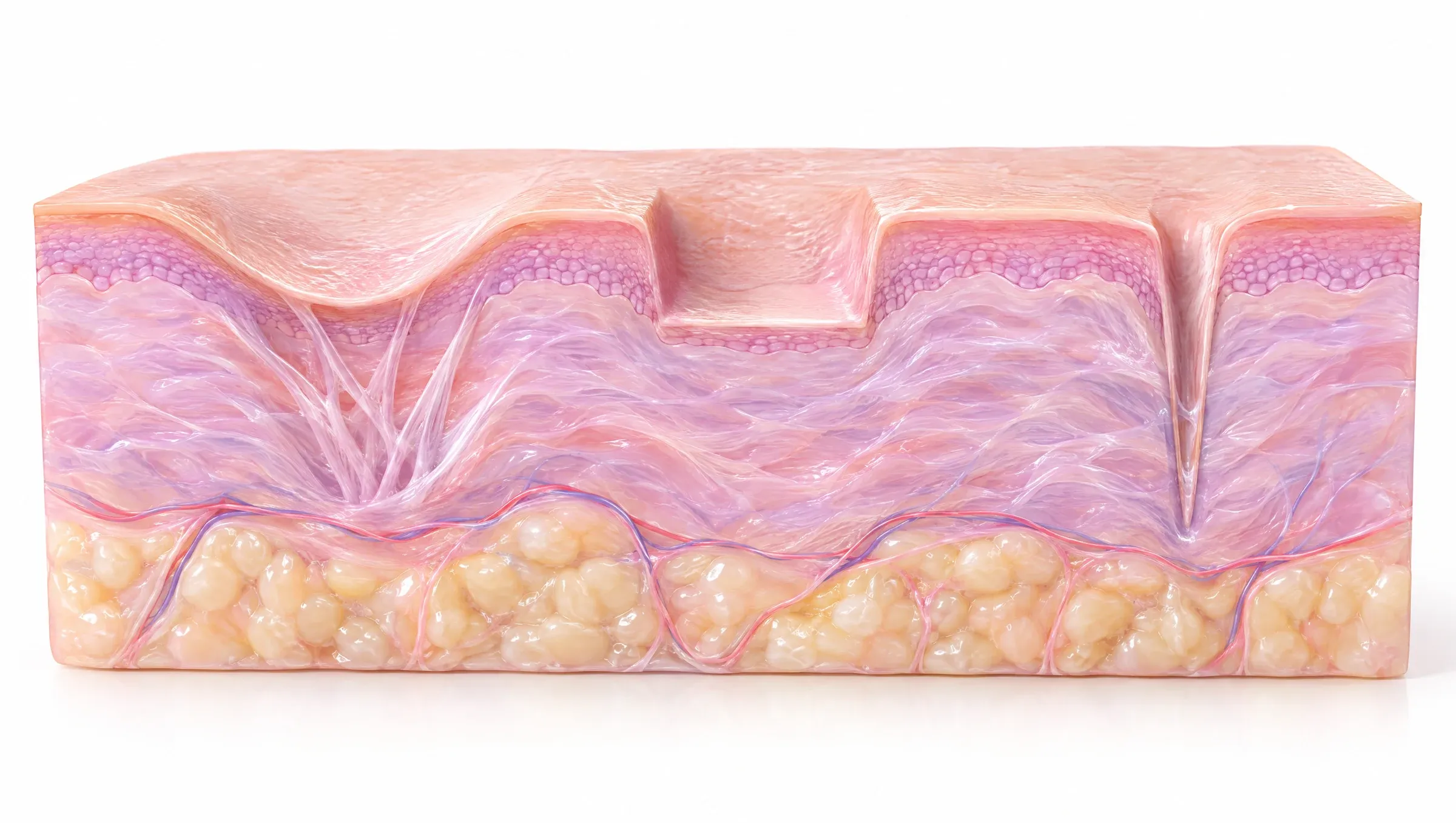
- Rolling: soft, sloping dips pulled down by bands beneath.
- Boxcar: round or oval, with sharp, steep edges.
- Ice-pick: narrow and deep, reaching far into the dermis.
Each type needs a different approach, which is why one treatment alone rarely does the whole job. The acne scar treatment page shows how each type is treated.
Can scars be prevented?
Mostly, yes. The single most effective step is treating acne early and properly, especially deep or painful acne, rather than waiting for it to pass. Also:
- Don’t squeeze, pick or pop spots, and avoid harsh scrubs.
- Ask a dermatologist about a painful lump early: an injection can settle it quickly.
- Wear sunscreen daily so marks don’t darken and linger.
- If you have scarred before, or scars run in your family, seek treatment sooner.
See acne for what causes breakouts and how they are treated.
When to see a dermatologist
See a dermatologist when acne is leaving any dents or raised scars, when dark marks are not fading after several months of good sun protection, or when scars affect your confidence. The visit maps your scar types, checks that acne is controlled and sets realistic expectations and a step-by-step plan.
How OrnaSkin treats acne scars
At OrnaSkin Madhur Nagar, scar plans are built from several tools matched to your scars and skin tone: fractional erbium glass and fractional CO2 lasers, microneedling radiofrequency, RF subcision for rolling scars, peels and laser toning for marks, and PRP where it helps healing. See acne scar treatment for sessions, downtime and typical cost.