
Acne scars are among the most common reasons people come to a dermatologist, and two of the most effective treatments for them are fractional CO2 laser and microneedling radiofrequency (MNRF). Both work by making the skin rebuild collagen, but they do it differently, and the difference matters for Indian skin.
First, what kind of scars?
Scar type decides the plan more than any machine does:
- Rolling scars: wide, soft dips with sloping edges, caused by bands pulling the skin down.
- Boxcar scars: round or oval depressions with sharp, steep edges.
- Ice-pick scars: narrow, deep pits.
- Raised (hypertrophic) scars, more common on the jaw, chest and back.
- Red or brown marks left by pimples are not true scars and usually fade with different treatment.
See our guide to acne scars for pictures of each type.
Fractional CO2 laser
A CO2 laser’s light is absorbed by water, so it vaporises tiny columns of skin in a grid pattern, leaving untouched skin in between to speed healing. The injury triggers strong collagen remodelling, which lifts depressed scars over the following months.
- Strengths: a large change per session, especially for boxcar scars and overall texture.
- Downtime: about five to seven days of redness, swelling and fine crusting.
- On brown skin: a higher risk of temporary darkening (post-inflammatory hyperpigmentation), so settings are conservative, skin is prepared beforehand and sun protection afterwards is essential.
Microneedling radiofrequency (MNRF)
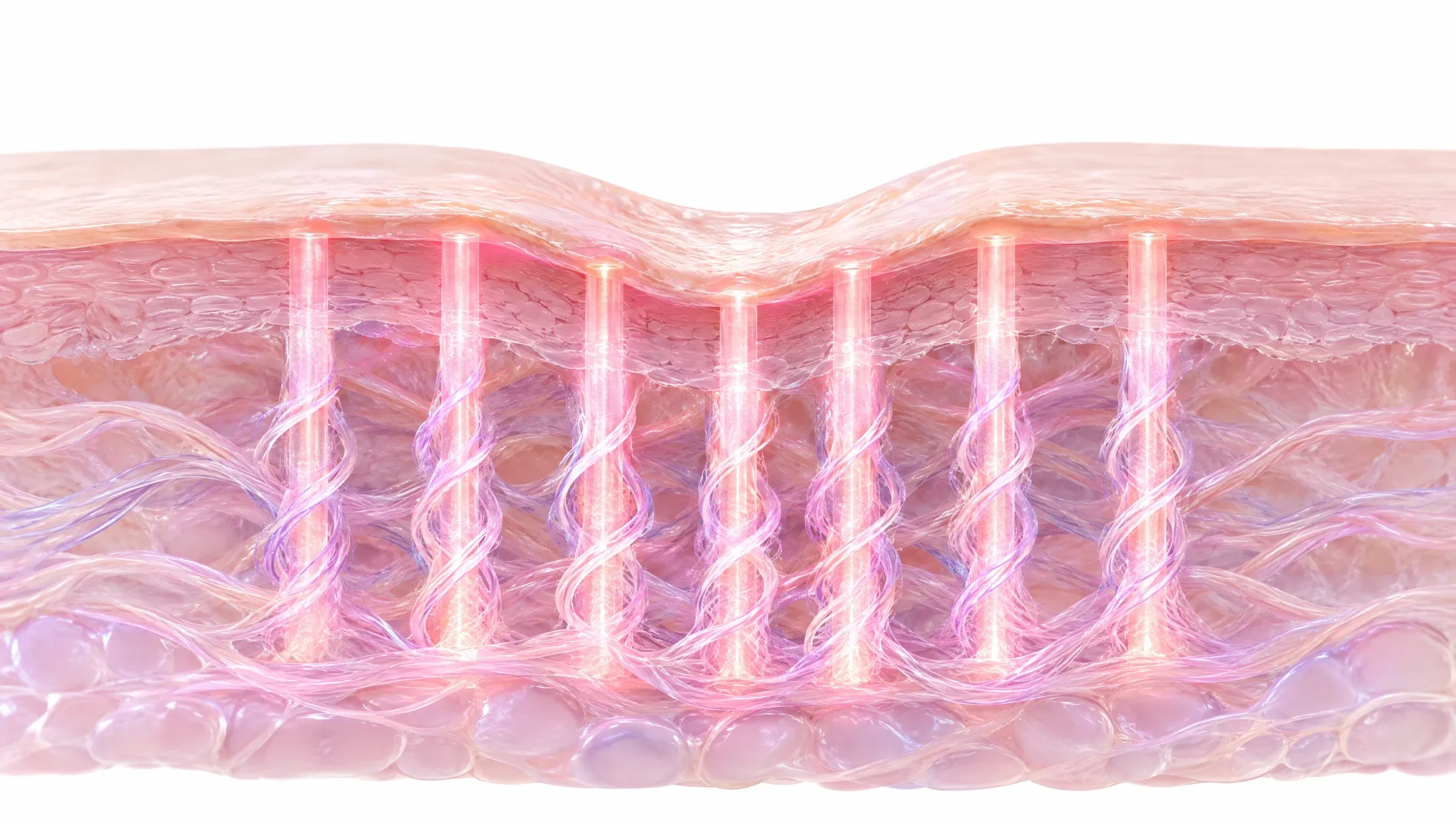
MNRF uses fine insulated needles that enter the skin and release radiofrequency heat at the tips, deep in the dermis. The surface is injured far less than with a laser, while the deeper layer still gets the heat that drives collagen.
- Strengths: good for rolling and shallow boxcar scars, pores and texture; tightens skin a little too.
- Downtime: usually one to three days of redness and pinpoint marks.
- On brown skin: generally a lower risk of darkening, which makes it a frequent first choice for Indian skin.
Side by side
| Fractional CO2 | MNRF | |
|---|---|---|
| How it works | Laser removes micro-columns of skin | Needles deliver heat under the surface |
| Change per session | Larger | Moderate |
| Downtime | About 5–7 days | About 1–3 days |
| Darkening risk on brown skin | Higher, needs careful settings | Lower |
| Typical course | Several sessions, 4–6 weeks apart | Several sessions, 4–6 weeks apart |
Why they are often combined
Most people have a mix of scar types, so the best results usually come from a plan:
- Subcision first, to release the bands under rolling scars. See RF subcision.
- MNRF or CO2 to remodel the surface and texture, chosen by scar type and skin.
- TCA CROSS or similar targeted treatments for ice-pick scars.
- Gentler options such as the erbium glass laser between sessions when downtime must be minimal.
Before you start
Active acne should be under control first, because new pimples make new scars. Some acne medicines, such as isotretinoin, need a gap before resurfacing. Tell the doctor about any history of keloids or cold sores.
At OrnaSkin we use a Dolphin fractional CO2 laser and EndyMed PURE microneedling radiofrequency (its Intensif probe), and choose between them, or combine them, after examining your scars. Read more about our acne scar treatment.