
How RF subcision works
When inflamed acne heals deep in the skin, it can leave bands of scar tissue that tie the surface down to deeper layers. The result is a rolling scar: a soft, sloping dip that resurfacing lasers alone struggle to lift, because the problem is underneath.
Subcision releases those bands. A fine probe is passed just beneath the scar through a tiny entry point, and moved gently to free the tethers. RF subcision adds controlled radiofrequency energy at the probe tip, which helps the release and stimulates collagen as the area heals. At OrnaSkin it is done with an RF subcision device at the Madhur Nagar clinic.
A tethered scar
In rolling scars, bands of scar tissue anchor the skin to deeper layers and pull it down into a soft dip.
Release the band
Under local anaesthetic, a fine probe glides just beneath the scar and releases the bands, helped by controlled radiofrequency.
The skin lifts
Freed from the tether, the skin rises, and the healing response lays down new collagen beneath it over the following months.
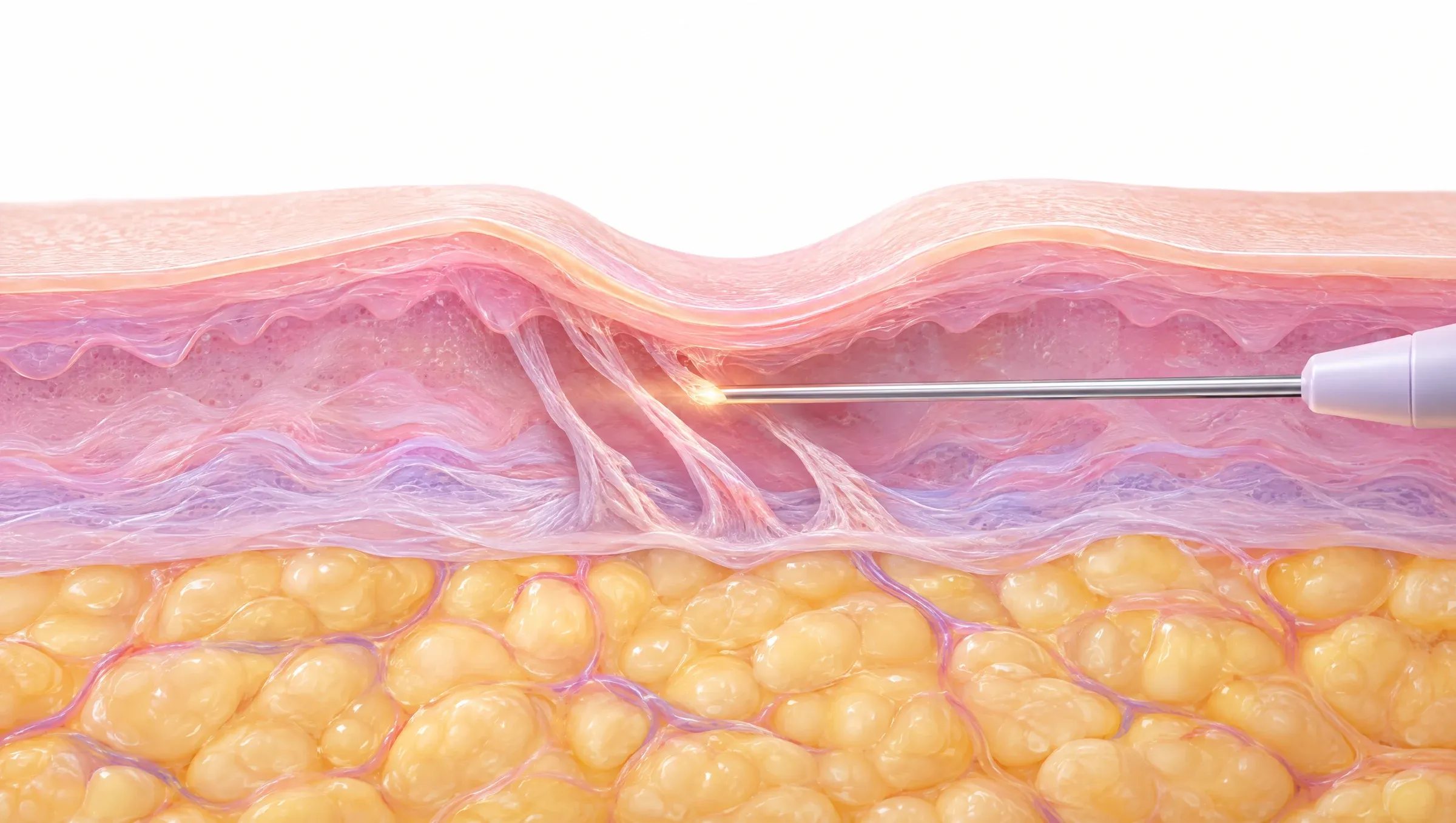
- Bands of scar tissue tie the surface of a rolling scar down to deeper layers.
- A fine probe beneath the scar frees the tethers, with RF energy at its tip.
- As the area heals, new collagen helps the surface lift.
Part of a scar plan
Most people have more than one type of acne scar. Subcision lifts the rolling ones; fractional lasers and microneedling radiofrequency then smooth the surface, and a small amount of filler can support a deep released scar. The dermatologist plans the order and timing as part of your acne scar treatment.
Active acne should be controlled first, because new breakouts make new scars. See acne treatment.
What results to expect
Days 1–7
Swelling, tenderness and bruising, which hide the early result.
Weeks 2–4
Swelling settles; the released scars sit higher.
2–3 months
New collagen supports the lift; further sessions are planned if needed.
Long term
Released scars stay softer, especially when combined with resurfacing.
Results vary with the number, depth and type of scars and how firmly they are tethered. The aim is clear improvement, not perfect skin.
Who it suits
Adults with rolling or broad, shallow tethered acne scars whose acne is controlled. It suits all skin tones.
It is not done during pregnancy, with active acne or infection in the area, with bleeding disorders or blood-thinning medicines (unless your doctor agrees), or in people who form keloids. It is usually delayed for some months after isotretinoin. People with a pacemaker or other implanted electronic device need a different method. Tell us about all your medicines.
Before, during and after
Before
Avoid aspirin, other blood-thinning painkillers, fish-oil supplements and alcohol for several days before, unless prescribed; don’t stop any prescribed medicine without asking your doctor. Plan the session at least two weeks before an important event, because of bruising.
During
The scars are marked with the skin stretched in good light. The area is cleaned and numbed with local anaesthetic. The probe is passed under each scar through a tiny entry point and the bands are released, with RF energy at the tip. Firm pressure and a cold pack finish the session. It takes about 30–45 minutes including numbing.
After
- Swelling and bruising for several days; cold packs in the first 24 hours and sleeping with your head raised both help.
- Keep the entry points clean; follow the advice on massage or tape if given.
- Avoid heavy exercise, saunas and facials for a few days.
Risks and how we minimise them
Bruising, swelling and tenderness are expected and settle over one to two weeks. Less often there are small lumps under the skin that soften with time, temporary brown marks from bruising, or the scar re-tethering. Rarely, infection, a collection of blood (haematoma) or over-lifting occurs.
We reduce these risks by choosing the right scars for subcision, using sterile technique and a fine probe, applying firm pressure after release, avoiding blood thinners where it is safe to, and reviewing you after each session.