
What acne is
Acne is a condition of the hair follicles and the oil glands attached to them. It starts when a follicle becomes blocked by oil (sebum) and skin cells that don’t shed properly. The blocked pore is a blackhead or whitehead. Bacteria that normally live on the skin then multiply in the trapped oil, and the body’s inflammation turns the blockage into a red pimple, a pus-filled spot or, deeper down, a painful lump.
Acne is one of the most common skin conditions in the world. Most teenagers have some, and many adults, particularly women, have it into their thirties and beyond. It usually affects the face, but the chest, back and shoulders are common too, because these areas have the most oil glands (more in our guide to back and chest acne).
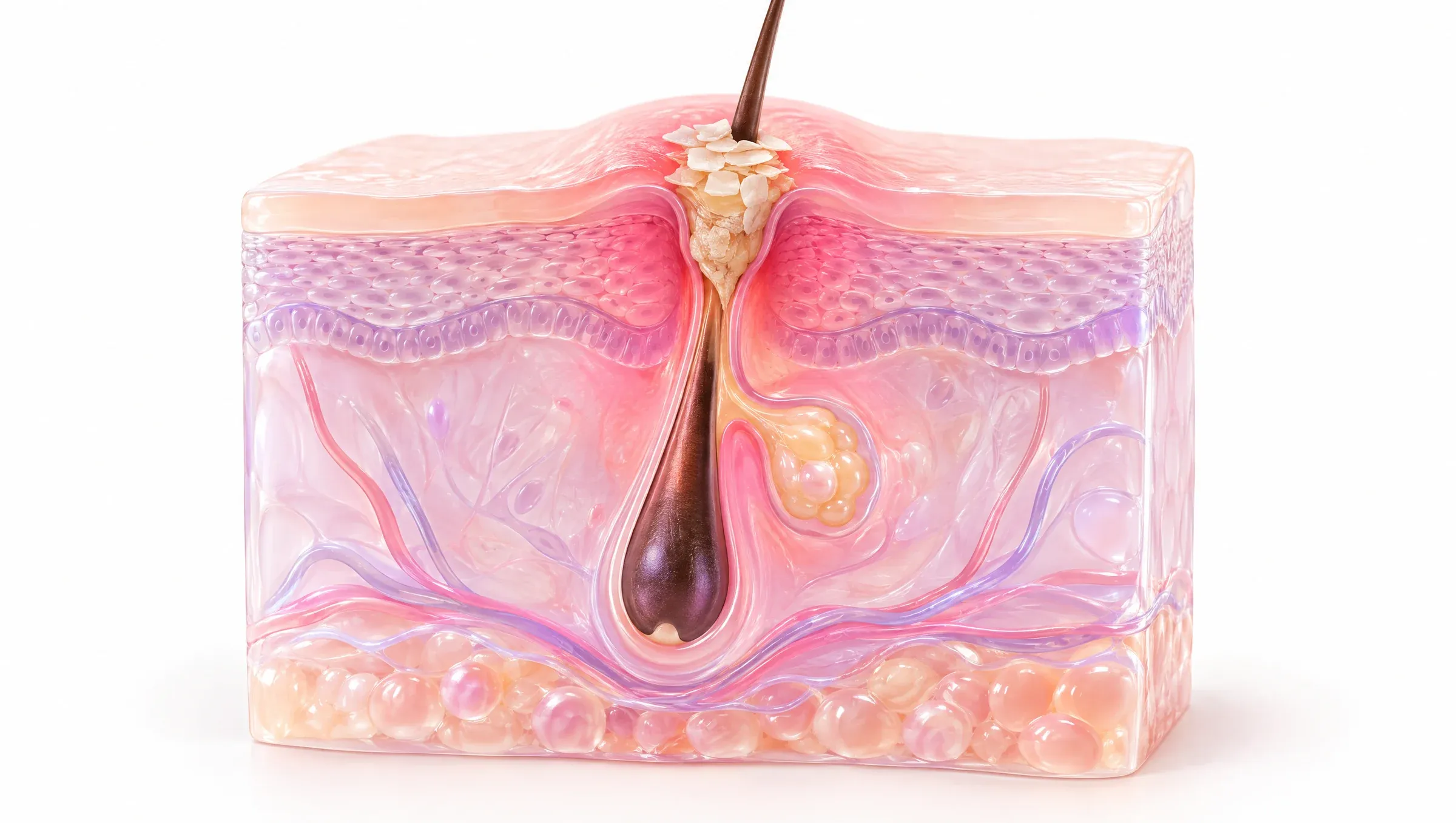
- A follicle is blocked by oil and skin cells that don’t shed properly.
- Bacteria that live on the skin multiply in the trapped oil.
- Inflammation turns the blockage into a red spot or a deeper lump.
Types of acne
Not all acne is the same, and the type decides the treatment. The dermatologist looks at which kinds of spots you have, how many, where and how deep.
Blackheads & whiteheads
- Looks like
- Small dark dots (blackheads) or skin-coloured bumps (whiteheads), often on the nose, forehead and chin.
- What’s going on
- Pores blocked by oil and skin cells, without much inflammation yet.
- Usually treated with
- Retinoid or salicylic acid creams, light chemical peels, and extraction in the clinic.
- Scar risk
- Low, but these are where inflamed pimples start, so treating them early helps.
Red pimples
- Looks like
- Red, tender bumps (papules) and spots with a yellow or white head (pustules).
- What’s going on
- Bacteria and inflammation inside a blocked follicle.
- Usually treated with
- Combination creams (such as a retinoid with benzoyl peroxide), and tablets for moderate acne, plus peels.
- Scar risk
- Moderate. Dark marks are very common in Indian skin, and picking raises the risk of scars.
Deep lumps & cysts
- Looks like
- Large, painful lumps under the skin that last for weeks, sometimes joining together.
- What’s going on
- Inflammation deep in the dermis, where the follicle wall has burst.
- Usually treated with
- Prescription tablets, often isotretinoin, and sometimes an injection into a single painful lump.
- Scar risk
- High. See a dermatologist early; this type is the main cause of acne scars.
Hormonal (adult)
- Looks like
- Tender pimples and deeper spots along the jawline, chin and neck, flaring before periods.
- What’s going on
- Oil glands that are sensitive to normal hormone changes; occasionally a hormonal condition such as PCOS.
- Usually treated with
- Creams plus, in some women, hormonal treatment after a proper assessment and tests if needed.
- Scar risk
- Moderate. Deep jawline spots often leave dark marks.
Back & chest
- Looks like
- Pimples on the back, chest and shoulders, often worse in heat and sweat.
- What’s going on
- Usually ordinary acne. Itchy, uniform small bumps can instead be a yeast infection of the follicles that looks like acne.
- Usually treated with
- Washes and creams, peels, and tablets if widespread. The yeast type needs antifungal treatment instead.
- Scar risk
- Moderate. Back acne can leave marks and raised scars, so treat it early.
Illustrations, not to scale. Most people have a mix of types; the dermatologist grades acne from mild to severe to choose treatment.
What causes pimples on the face, and what makes them worse
Four things work together in every pimple: extra oil, blocked pores, acne bacteria and inflammation. Different factors push one or more of these:
- Hormones. Androgen hormones increase oil production at puberty, before periods, in pregnancy and with conditions such as PCOS.
- Genes. Acne often runs in families, including how severe it is and whether it scars.
- Products. Heavy creams, oils, some hair oils that run onto the forehead, and thick make-up can block pores. Look for “non-comedogenic” on labels.
- Medicines. Steroid creams and tablets, some hormonal treatments and a few other medicines can trigger acne.
- Friction and sweat. Helmets, masks, tight straps and Rajkot’s hot, humid months can all make breakouts worse.
- Stress and sleep. These don’t cause acne by themselves, but they can trigger flares.
- Diet, for some people. Sugary, high-glycaemic foods, skimmed milk and whey protein are linked with acne in some studies.
Acne is not caused by dirty skin, and scrubbing harder makes it worse.
Common myths
- “It will go away on its own.” It may, eventually, but in the meantime it can leave marks and scars that last much longer than the acne.
- “Toothpaste or lemon will dry it out.” These irritate the skin and can cause burns and dark patches.
- “Sunlight helps.” A tan may hide redness for a while, but sun darkens acne marks and some acne medicines make skin burn easily.
- “Only teenagers get acne.” Adult acne is common and very treatable.
When to see a dermatologist
See a dermatologist if your acne:
- hasn’t improved after two to three months of over-the-counter care;
- is leaving dark marks or any dents or raised scars;
- includes deep, painful lumps;
- started suddenly in adulthood, or comes with irregular periods or excess hair growth;
- is affecting your confidence, mood or social life.
Early treatment is the best way to prevent acne scars, which are much harder to treat than acne itself.
Looking after acne-prone skin at home
- Wash twice a day with a gentle, soap-free cleanser, and after sweating.
- Use a light, non-comedogenic moisturiser, even if your skin is oily, especially with drying acne creams.
- Apply a broad-spectrum sunscreen every morning; it also helps dark marks fade.
- Apply prescribed creams to the whole area where you get spots, not only to existing pimples.
- Don’t pick, squeeze or scrub, and avoid steroid creams.
- Change pillowcases often and keep phones and helmets clean.
- Be patient: give any new routine eight to twelve weeks.
How OrnaSkin treats acne
At OrnaSkin Madhur Nagar, Dr. Smit Thakkar grades your acne, looks for triggers and agrees a plan that usually combines prescription creams or tablets with in-clinic treatments such as chemical peels, extraction and, for marks, laser toning. Read more about acne treatment, or about acne scar treatment once the acne is under control.