
How laser toning works
Laser toning uses a Q-switched Nd:YAG laser at low energy with a wide, even beam. The laser fires in pulses lasting a few billionths of a second. Pigment absorbs that energy and breaks into particles small enough for the body to clear, while the surrounding skin is barely warmed. Many gentle passes, repeated over a course, reduce extra pigment step by step rather than all at once.
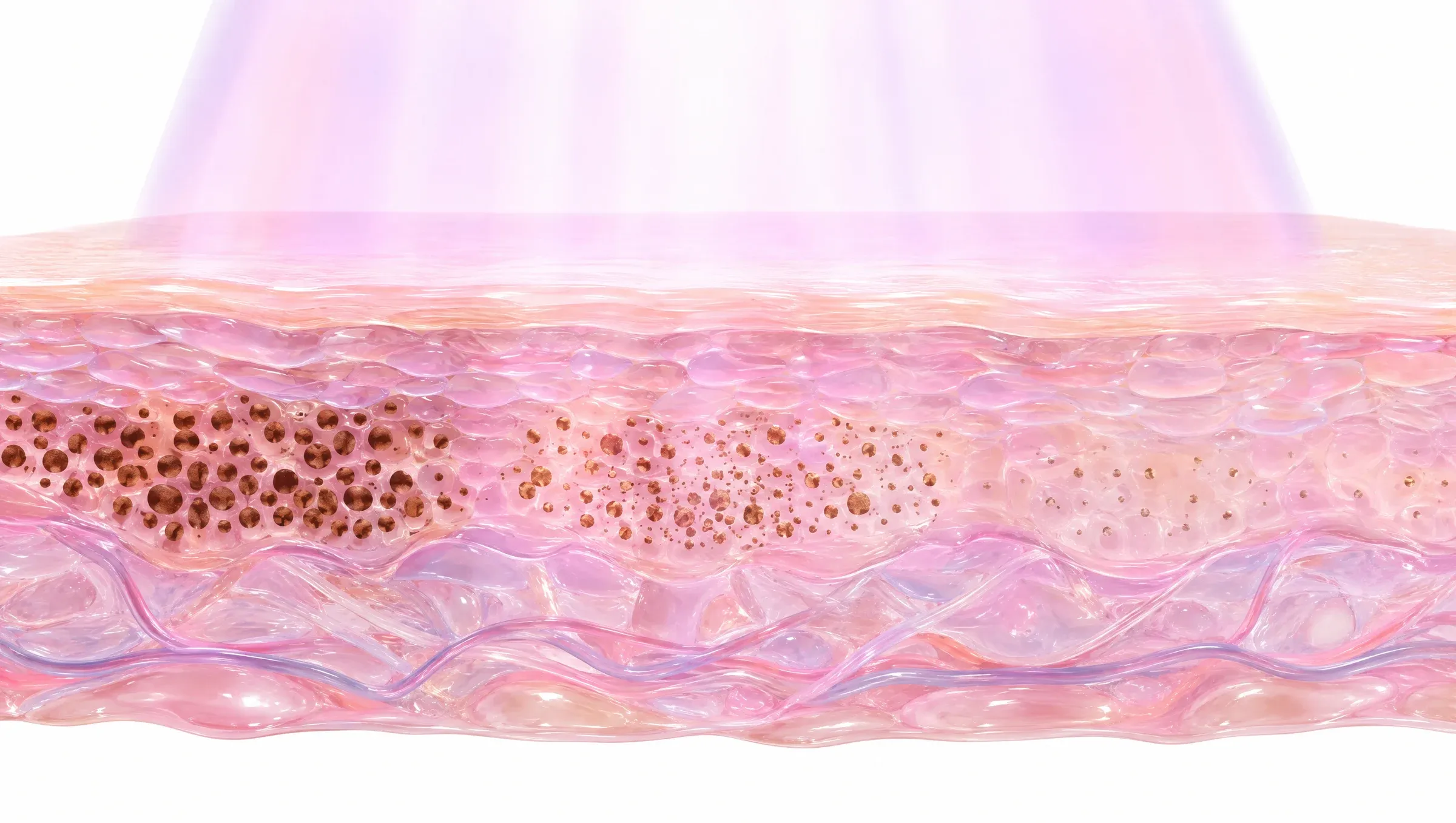
- Gentle, low-energy pulses pass over the whole area.
- Excess melanin breaks into smaller fragments without wounding the skin.
- Over a course of sessions the body clears them and tone evens out.
Drag the slider to see what happens over a typical course:
At OrnaSkin, toning is done on our Q-switched Nd:YAG lasers, the Bluecore IRIS and the Medlite. The same lasers, at different settings, are used for the carbon laser peel. For pigment that sits deeper or resists toning, a picosecond laser may be suggested.
What it can help with
- Tan and uneven tone on the face, neck, hands and body.
- Freckles and sun spots.
- Melasma, as part of a combined plan with sunscreen and prescription creams. See pigmentation and melasma treatment.
- Acne marks and post-inflammatory darkening.
- Dull skin and mildly enlarged pores, with a subtle rejuvenating effect.
Raised moles, sudden new spots or spots that change shape or colour must be checked by a dermatologist before any laser treatment.
A combined plan works best
Laser toning rarely works alone. For lasting results, especially for melasma, we combine it with daily broad-spectrum sunscreen, prescription creams that slow pigment production, and sometimes chemical peels or exosomes. At OrnaSkin, toning is often part of our APRT course (Advance Pigment Reduction Treatment), which combines these in the mix your skin needs.
What results to expect
Same day
Skin may look slightly pink for an hour, then fresher.
Sessions 2–4
Tan and lighter spots start fading; tone looks more even.
Sessions 6–10
Clearer, more uniform skin. Melasma usually lighter, not gone.
Maintenance
Sunscreen daily; occasional top-up sessions keep pigment from returning.
Sessions are usually two to three weeks apart. Results vary with the type and depth of pigment, your skin type and sun protection.
Who it suits
Adults with tan, freckles, sun spots, melasma, acne marks or dull, uneven skin, including Indian skin types. It suits busy people because there is little or no downtime.
It is postponed if you have a recent tan or sunburn, active infection or cold sores on the area, or are pregnant. Tell us about light-sensitive conditions, medicines that make you sensitive to light, gold-based medicines, or a tendency to keloids.
Before, during and after
Before
Avoid sun exposure and tanning for about two weeks, and waxing or bleaching on the area for a week. Stop retinoid creams and scrubs two or three days before. Come without make-up.
During
The skin is cleansed and you wear protective eye shields. The laser is passed evenly over the area several times. You feel light snapping and warmth, and a cooling gel or air may be used. A face session takes about 15–20 minutes, and sunscreen goes on before you leave.
After
Mild redness or warmth for an hour or two is common. You can return to work immediately and wear make-up the same day. Use a gentle cleanser, moisturiser and sunscreen, and avoid strong sun, scrubs and peeling creams for a few days.
Risks and how we minimise them
Laser toning is generally gentle. Possible effects are short-lived redness, mild swelling, small pinpoint spots, or a temporary flare of pigmentation. Too many high-energy sessions close together can cause light, blotchy patches, especially when treating melasma. We reduce these by using conservative settings, spacing sessions properly, adjusting the plan to how your skin responds, and reviewing progress regularly. For the details, from what is normal after a session to the warning signs, read laser toning side effects: white spots, rebound and staying safe.