
What melasma is
Melasma is a long-lasting pattern of brown or grey-brown patches, usually on both sides of the face. It is most common on the cheeks, forehead, bridge of the nose and upper lip, and less often on the jawline or forearms. It is far more common in women than men, often starts between the ages of 20 and 40, and is especially common in Indian and other brown skin.
The patches are caused by pigment cells (melanocytes) that have become overactive. In melasma, the problem is not only in those cells: the deeper skin, its small blood vessels and the protective barrier all send signals that keep pigment production switched on. That is why melasma behaves differently from ordinary tan or spots, and why it tends to return.
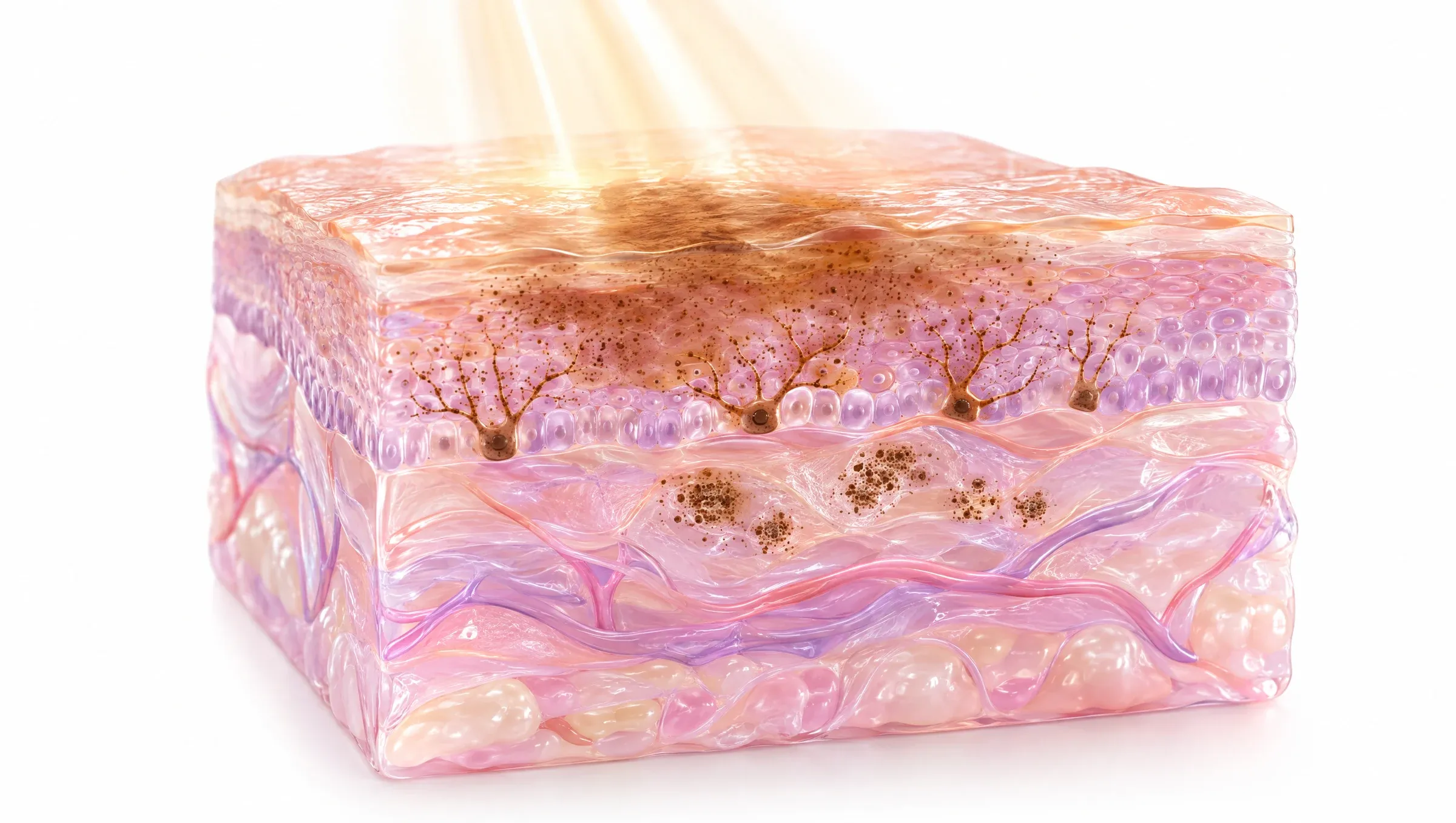
- Pigment cells (melanocytes) at the base of the upper skin become overactive.
- Pigment spreads through the upper layer, and in some patches sits deeper.
- Sun, heat and signals from the deeper skin keep production switched on.
Melasma or something else?
Many brown spots on the face look alike but need different treatment. Melasma in particular can be made worse by treatments that suit other spots, so a correct diagnosis comes first.
Melasma
- Looks like
- Blotchy, fairly symmetrical patches on both cheeks, forehead, nose or upper lip, with irregular edges.
- Usual triggers
- Sun, heat, visible light, hormones (pregnancy, the pill), genes and irritating products.
- Responds to
- Strict sun protection, prescription creams, gentle peels and low-energy laser toning.
- Comes back?
- Often. It is a chronic tendency, so maintenance is part of the plan.
Sun spots
- Looks like
- A few defined, round or oval brown spots, on sun-exposed skin, usually after 35–40.
- Usual triggers
- Years of sun exposure.
- Responds to
- Targeted pigment lasers (Q-switched or picosecond) and peels.
- Comes back?
- Treated spots usually stay away; new ones can appear with sun.
Freckles
- Looks like
- Many small, light-brown dots over the nose and cheeks, darker in summer.
- Usual triggers
- Genes and sun.
- Responds to
- Pigment lasers and sun protection.
- Comes back?
- They can darken again with sun.
Marks after pimples
- Looks like
- Flat brown marks exactly where pimples, bites or rashes were.
- Usual triggers
- Inflammation from acne or injury; very common in brown skin.
- Responds to
- Treating the acne, sunscreen, creams, peels and gentle toning.
- Comes back?
- Old marks fade; new ones follow new inflammation.
Hori’s naevus
- Looks like
- Small grey-brown or bluish dots, usually on both cheekbones, starting in adulthood. Often mistaken for melasma.
- Usual triggers
- Pigment cells deep in the dermis; genes play a part.
- Responds to
- Creams barely help. Q-switched or picosecond lasers over several sessions.
- Comes back?
- Usually not, once cleared.
Illustrations, not to scale. Several types often appear together; a dermatologist tells them apart by pattern, depth (with a dermatoscope) and history.
What causes and triggers melasma
- Sunlight, both ultraviolet and visible light, is the main trigger. Even short daily exposure, like the drive to work or sitting by a window, keeps melasma active.
- Heat from cooking, hot weather, steam and saunas can worsen it, which is relevant in Rajkot’s long summers.
- Hormones: pregnancy (“the mask of pregnancy”), contraceptive pills and hormone treatments. Thyroid problems are linked in some people. Our post on skincare in pregnancy explains which melasma creams to pause while pregnant.
- Genes: many people with melasma have a parent or sibling with it.
- Irritation: harsh cosmetics, scented products, bleaches and aggressive treatments inflame the skin and darken melasma.
- Some medicines, especially those that make the skin more sensitive to light.
Why melasma keeps coming back
Melasma is best thought of as a tendency, not a stain. Treatment calms the overactive pigment cells and clears existing pigment, but the triggers are part of everyday life. A summer without sunscreen, a pregnancy or stopping maintenance creams can switch it back on. The good news is that with a plan that includes protection and maintenance, most people keep it faint and manageable.
A common trap is chasing quick results. Strong peels, high-energy lasers or steroid-containing creams can lighten melasma for a few weeks, then make it rebound darker or leave white patches. Gentle and steady works better.
When to see a dermatologist
See a dermatologist if patches are spreading or darkening despite sunscreen, if you are unsure whether it is melasma or another kind of pigmentation, or before starting any strong cream or procedure. Also tell a doctor if a single dark spot is changing shape, colour or size, which needs checking for other reasons.
Living with melasma: home care
- Use a broad-spectrum sunscreen of SPF 30 or more every morning, including indoors near windows, and reapply outdoors. A tinted sunscreen adds protection from visible light (how to choose one).
- Wear a wide-brimmed hat and seek shade; avoid the midday sun.
- Choose gentle, fragrance-free products and avoid scrubs, bleaches and parlour “de-tan” treatments.
- Avoid unprescribed steroid or “fairness” creams.
- Keep using maintenance creams as advised, even after the patches fade.
How OrnaSkin treats melasma
At OrnaSkin Madhur Nagar, melasma is treated with a long-term plan: strict sun protection, prescription creams, and, where helpful, gentle chemical peels, low-energy laser toning or the pico laser, and exosomes for skin support, followed by maintenance. Laser is kept gentle and well spaced, because too much toning can leave white spots or darker patches (what to know about laser toning side effects). See pigmentation and melasma treatment for sessions and typical cost.