
What causes pigmentation
Skin colour comes from melanin, made by pigment cells called melanocytes. Pigmentation appears when those cells make more melanin in one place than around it. On Indian skin the pigment cells are naturally active, which is why dark patches are so common here, and also why they need careful, gentle treatment.
The common triggers are sun and heat, hormones (pregnancy, the contraceptive pill, thyroid problems), inflammation from acne, eczema or injury, some cosmetics and medicines, and genes. Several are usually at work together.
The common types
- Melasma: symmetrical brown or grey-brown patches on the cheeks, forehead, nose or upper lip, often linked to hormones and sun. It is long-term and tends to recur.
- Sun spots and freckles: small, well-defined brown spots on sun-exposed skin.
- Post-inflammatory marks: flat dark marks left after acne, a rash, a burn or a cut.
- Tan and uneven tone: general darkening from sun exposure, often patchy on the face, neck and hands.
- Dark underarms, neck, elbows and knees: from friction, shaving, hormones or insulin resistance, which may need checking.
Why depth matters
Surface (epidermal)
Tan, freckles, sun spots, most acne marks
Usually reached bySunscreen, creams, peels, laser toning
Mixed
Most melasma
Usually reached byCreams and medicines + gentle laser toning, with maintenance
Deep (dermal)
Some melasma, certain birthmarks and grey-blue patches
Usually reached byQ-switched or picosecond laser, more sessions
Pigment near the surface fades faster and responds to creams, peels and toning. Pigment deeper in the dermis is slower and needs energy that reaches further, such as a Q-switched or picosecond laser. Melasma usually has both, which is why it needs patience and maintenance rather than one strong treatment. Our guide to the types of dark spots on the face shows how to tell them apart.
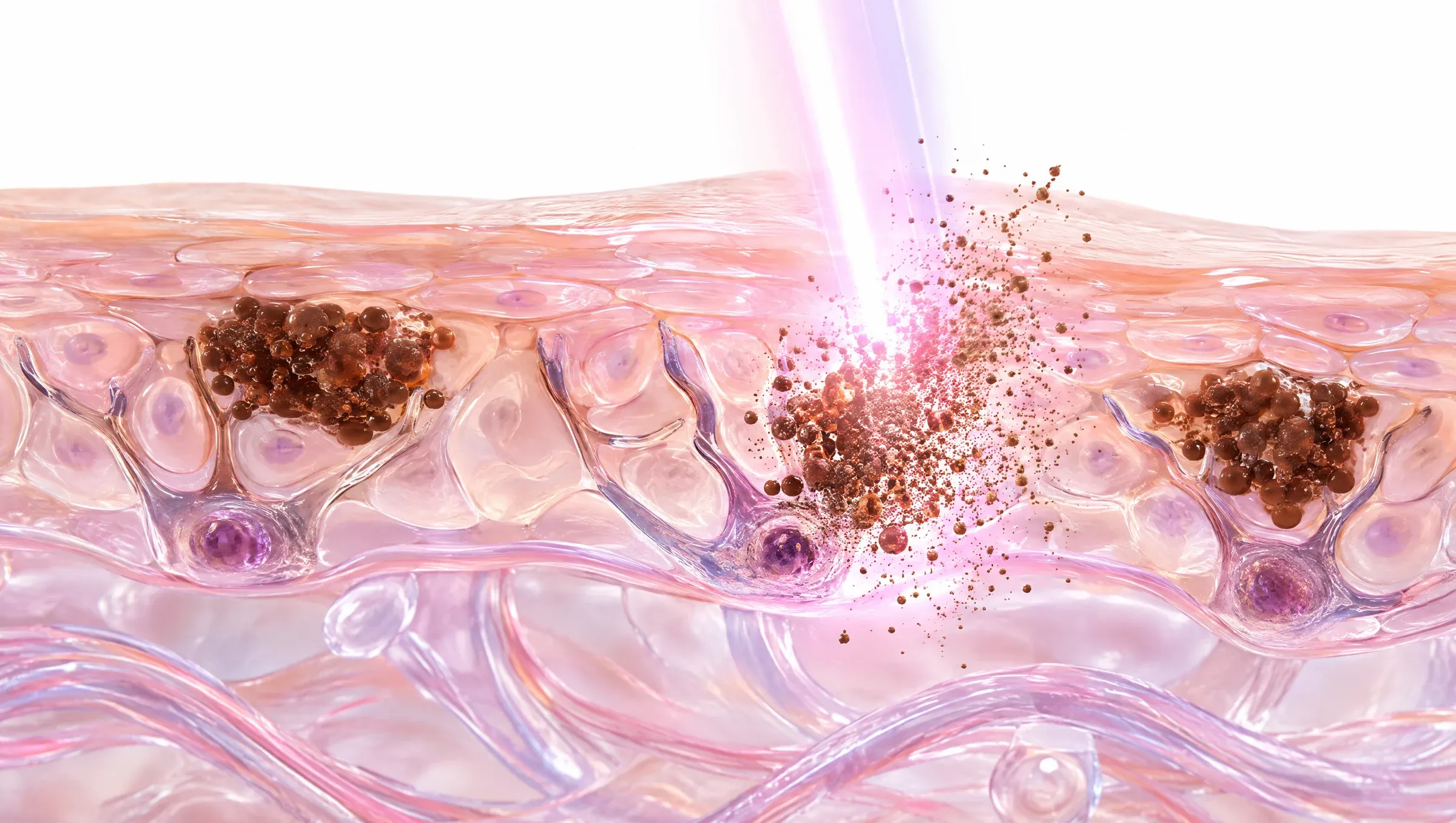
- An ultra-short laser pulse is absorbed by clusters of melanin.
- The pigment breaks into much smaller fragments.
- The body’s own clean-up cells clear them over the following weeks.
How we treat pigmentation
Treatment works best as a combination, adjusted every few weeks according to how your skin responds.
- Sun protection and skincare come first. Without them, no procedure lasts.
- Prescription creams and, where suitable, oral medicines reduce pigment production. Your dermatologist chooses them for your skin and checks your health first.
- Laser toning with a Q-switched Nd:YAG laser (Bluecore IRIS and Medlite) passes low-energy pulses evenly over the skin to break up excess pigment with little heat. Sessions are quick and have no downtime.
- Picosecond laser (DEKA) breaks stubborn or deeper pigment into finer particles, with less heat than older lasers.
- Chemical peels speed up the shedding of pigmented surface cells and help creams work.
- Exosomes may be added after toning to support repair and calm the skin.
At OrnaSkin these are planned as a course called APRT, our Advance Pigment Reduction Treatment, combining laser toning, peels and skincare in the mix your skin needs. The same approach is used for underarms, neck, hands, back and other body areas.
Who it suits
Pigmentation treatment suits most adults with melasma, sun damage, acne marks, tan or uneven tone. A dermatologist first confirms what the pigment is, because some patches that look like pigmentation are other conditions that need different care, and a changing or irregular dark spot needs checking before any treatment.
It may be postponed during pregnancy, and some creams and procedures are avoided while breastfeeding. Our post on skincare in pregnancy explains what to use meanwhile.
Before, during and after
Before
Avoid sun tanning for two weeks and stop any bleaching, steroid or unprescribed creams; tell us about everything you have used on the area. We may start you on creams a few weeks before procedures to prepare the skin.
During
Laser toning takes about 15 to 20 minutes for the face. You feel light snapping and warmth. Peels sting for a few minutes and are then neutralised.
After
Mild redness settles within hours after toning. After a peel the skin may feel tight and flake lightly for a few days. Use sunscreen every day without exception, avoid heat, steam and saunas for a couple of days, and don’t scrub or pick.
What results to expect
Pigment fades gradually. Many people notice a lighter, more even tone after three or four sessions, with further improvement over the course. Surface pigment clears faster than deep pigment, and melasma improves but usually needs ongoing care. Results vary from person to person, and photographs at each visit help you see the change.
Risks and how we minimise them
- Rebound darkening or uneven lightening can happen if energy is too high or skin is tanned. We use low, gradual settings for melasma and stop or adjust at the first sign of irritation.
- Redness, irritation or dryness from creams and peels is usually mild and managed by adjusting the routine.
- Recurrence is the biggest challenge with melasma; maintenance sessions and strict sun protection keep it under control.
Our post on laser toning side effects explains white spots, rebound and how a spaced course keeps them rare.