
What stretch marks are
Stretch marks (striae) form when skin stretches faster than its collagen and elastic fibres can adapt, often while hormones such as those in pregnancy or puberty make the skin more fragile. The fibres in the dermis tear and straighten, and the skin above becomes thinner. They are very common: in pregnancy, during growth spurts, with weight gain or muscle building, and with long-term use of strong steroid creams or tablets.
Marks change with time. New marks are pink, red or purple; over months to years they fade to pale, slightly sunken lines. That stage matters, because it changes which treatment works best.
- How it looks
- Raised or flat pink, red or purple streaks, sometimes itchy
- What is happening
- Collagen and elastic fibres have recently torn under the strain; small blood vessels and inflammation give the colour
- What helps
- The best time to treat. Prescription creams (not in pregnancy or breastfeeding), microneedling radiofrequency and gentle laser sessions
- What to expect
- Colour often fades well, and the marks become flatter and narrower
- How it looks
- Pale, slightly sunken lines with a fine, crinkled surface
- What is happening
- The tear has healed as a thin scar: fewer fibres, less elastic tissue and fewer pigment cells
- What helps
- Collagen-building treatments: fractional laser, microneedling radiofrequency and microneedling, over more sessions
- What to expect
- Texture and depth improve; the pale colour changes less, so the aim is “less noticeable”, not “gone”
- How it looks
- Flatter, narrower marks closer to the surrounding skin
- What is happening
- Controlled micro-injury prompts the skin to lay down new collagen and elastic fibres in the mark
- Looking after it
- Daily moisturiser and sunscreen on exposed areas, and occasional maintenance
- What to expect
- Improvement builds for 3–6 months after the last session. Results vary with the age and width of the marks
Illustration, not to scale. No treatment removes stretch marks completely; the dermatologist chooses the treatment and number of sessions for your marks and skin tone.
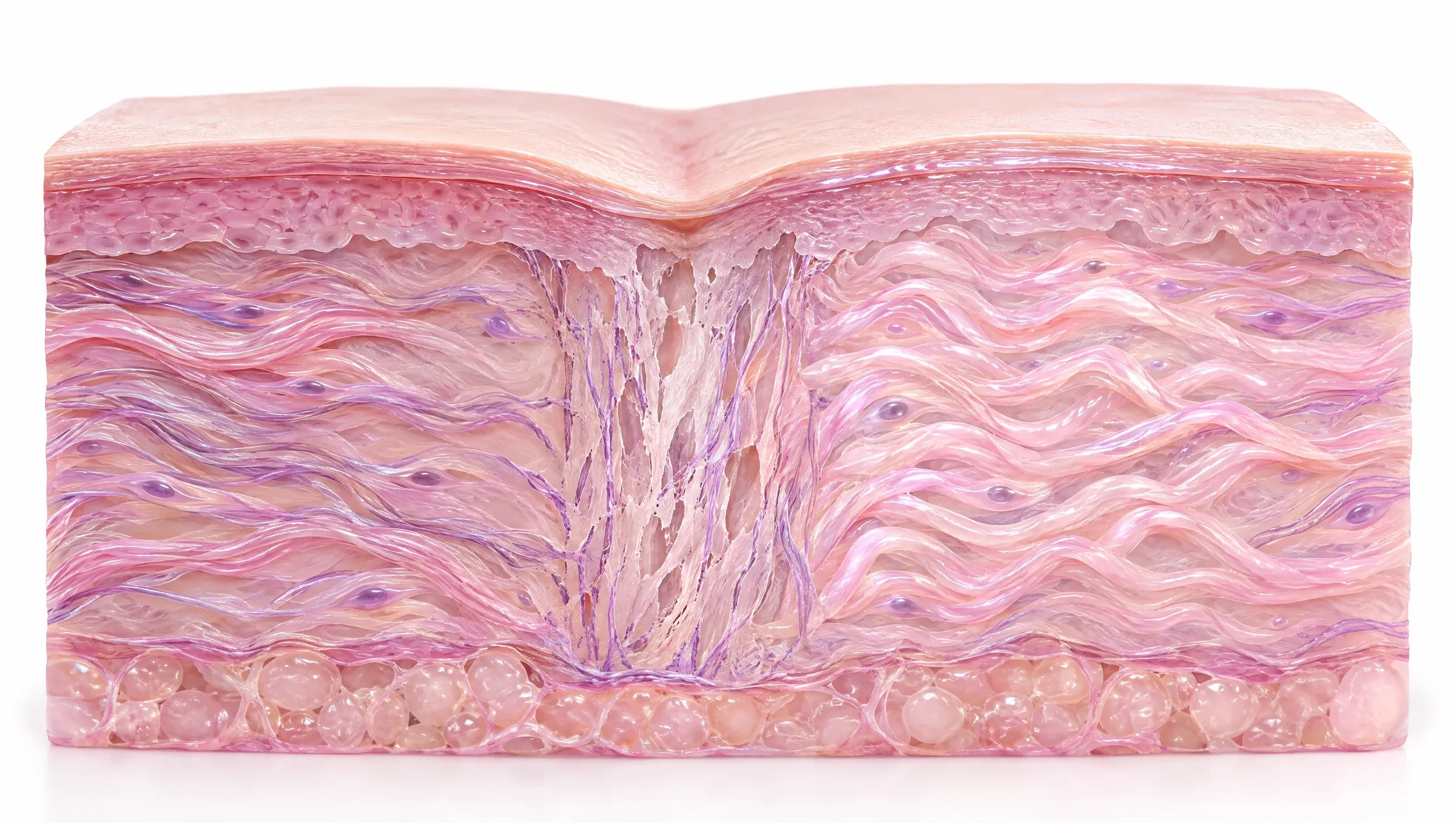
- Skin stretches faster than its fibres can adapt, often when hormones make them fragile.
- Collagen and elastic fibres tear and straighten, and the skin above thins.
- Collagen-building sessions encourage new fibres to form over a course.
How we treat them
Treatment aims to make the skin rebuild collagen and elastic tissue within the mark. The dermatologist chooses from:
- Microneedling radiofrequency, which combines fine needles with radiofrequency heat deep in the dermis, with little surface injury. It suits all skin tones and both red and white marks.
- Fractional laser, which makes tiny columns of controlled injury that the skin repairs with new collagen. Settings are chosen carefully for Indian skin.
- Microneedling and peels to smooth the surface and improve texture.
- Prescription creams, such as retinoids, for new marks, when you are not pregnant or breastfeeding.
At OrnaSkin, the stretch marks course combines these methods on the EndyMed PURE (Intensif microneedling radiofrequency) and our fractional CO2 and erbium glass lasers, chosen for your marks and skin. The same collagen-building approach is used for acne scars.
What results to expect
After each session
Redness and mild swelling for 1–3 days; the area may feel like mild sunburn.
Mid-course
Marks start to look flatter and smoother; red marks begin to fade.
3–6 months after
New collagen keeps building; marks are narrower and less noticeable.
Long term
Improvement is long-lasting, but new marks can still form if the skin stretches quickly again.
Results vary with the age, width and colour of the marks, your skin type and the area. Pale marks usually remain slightly lighter than the surrounding skin.
Who it suits
Adults with stretch marks on the abdomen, hips, thighs, buttocks, breasts, arms or back who want them to be less noticeable. New marks respond best, but older marks can improve too. It is best started when your weight is stable and, after pregnancy, once you have recovered.
Treatment is postponed during pregnancy and adjusted while breastfeeding. It is also avoided over active infection or eczema, and if you tend to form keloids. Tell us if marks appeared without an obvious cause, or alongside weight gain, a rounder face or high blood pressure, because they can occasionally be a sign of a hormonal condition that needs checking first.
Before, during and after
Before
The dermatologist examines your marks, asks how and when they appeared and plans the combination and number of sessions. Avoid sun exposure and tanning of the area for a few weeks before. If you have brown skin that darkens easily, a preparation cream may be started first.
During
A numbing cream is applied for 30 to 45 minutes. The chosen treatment is then done over the marks; you feel prickling, warmth or light snapping. A soothing cream is applied at the end. Sessions take about 30–60 minutes depending on the area.
After
- Redness, swelling or pinpoint marks settle over 1–3 days.
- Keep the area clean and moisturised, wear loose clothing and avoid heavy exercise, swimming and saunas for a day or two.
- Protect exposed areas from the sun to prevent darkening.
Risks and how we minimise them
Side effects are usually temporary: redness, swelling, dryness and itching. On brown skin, the main risk is temporary darkening (post-inflammatory hyperpigmentation) after heat-based treatments, which fades over weeks to months. Rarely, infection, blistering or scarring can occur.
We reduce these risks by choosing gentler, fractional settings for Indian skin, testing a small area where needed, preparing pigment-prone skin, using sterile technique, and giving clear aftercare with sun protection.