“Laser treatment” covers many very different machines. A laser that removes hair cannot treat acne scars, and a laser for scars is wrong for melasma. Understanding the basics helps you ask the right questions.
The principle: one wavelength, one target
A laser produces light of a single wavelength. Different parts of the skin absorb different wavelengths:
- melanin (pigment in skin and hair);
- haemoglobin (in blood vessels);
- water (in all skin tissue).
By choosing the wavelength, pulse length and energy, a dermatologist decides what gets heated and what is left alone. Our laser technology page has an interactive chart of where each of our lasers sits.
Lasers for pigmentation
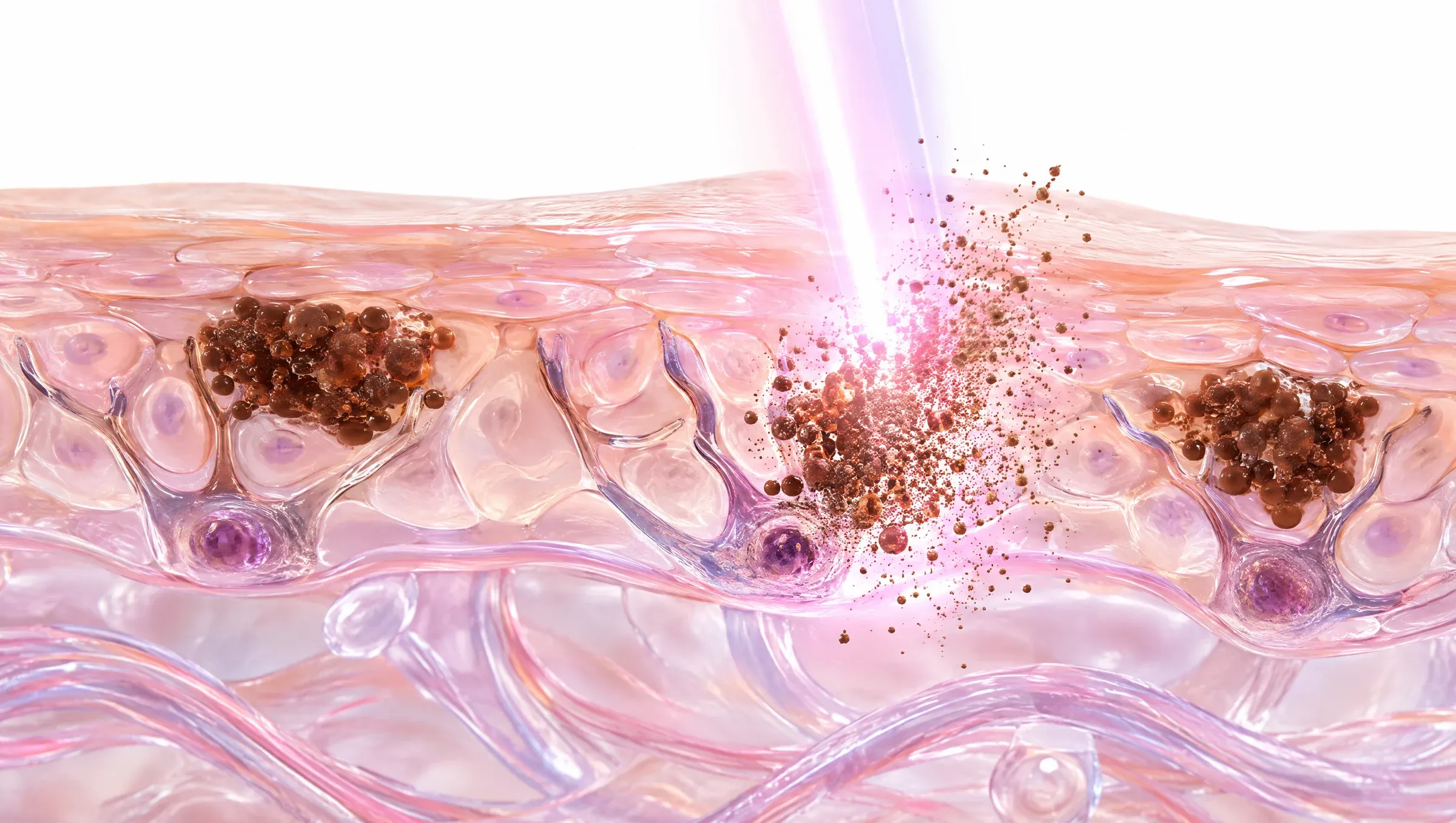
Q-switched Nd:YAG and picosecond lasers fire extremely short pulses that shatter pigment into tiny particles, which the body then clears. They are used for sun spots, freckles, some birthmarks and, at very gentle settings, laser toning for uneven tone. Melasma needs particular care because heat can make it worse.
See pico laser, Q-switch laser toning and pigmentation treatment.
Lasers for unwanted hair
Alexandrite and diode lasers target the pigment in hair roots. With modern in-motion techniques and cooling, they can be used on a wide range of Indian skin tones. See laser hair removal.
Lasers for scars and texture
Fractional lasers treat the skin in a grid of microscopic columns, leaving healthy skin in between for faster healing:
- Ablative fractional CO2 removes tiny columns of tissue: bigger change, about a week of downtime.
- Non-ablative fractional (erbium glass, 1550 nm) heats columns without breaking the surface: less change per session, very little downtime.
They are used for acne scars, enlarged pores and fine lines. See acne scar treatment, erbium glass laser and our comparison of CO2 and MNRF.
Not lasers, but often confused with them
- Radiofrequency and microneedling RF use electrical energy to heat and tighten. See RF skin tightening.
- HIFU uses focused ultrasound for lifting. See HIFU.
- IPL (intense pulsed light) is a broad-spectrum flash, not a laser.
Why settings matter on Indian skin
Brown skin has more melanin, which competes with the target for laser energy. Too much energy can cause burns, dark patches or light patches. Safe laser treatment on Indian skin means:
- the right laser type for your skin and concern;
- conservative settings and gradual increases;
- test patches when in doubt;
- cooling during treatment;
- sun protection before and after.
What to ask before any laser
- Which laser will be used, and why that one for my skin?
- Who sets the parameters and performs the treatment?
- How many sessions, how far apart, and what is the indicative total cost?
- What downtime and side effects should I expect, and what happens if one occurs?
A good clinic will answer all four clearly. Book a consultation and we will tell you which laser, if any, suits your skin.