
HIFU is often called a “non-surgical facelift”. That nickname is half right: it does work on the same deep layer a surgeon lifts, but it tightens gradually and modestly rather than lifting dramatically. Here is how it works and what to realistically expect.
How HIFU works
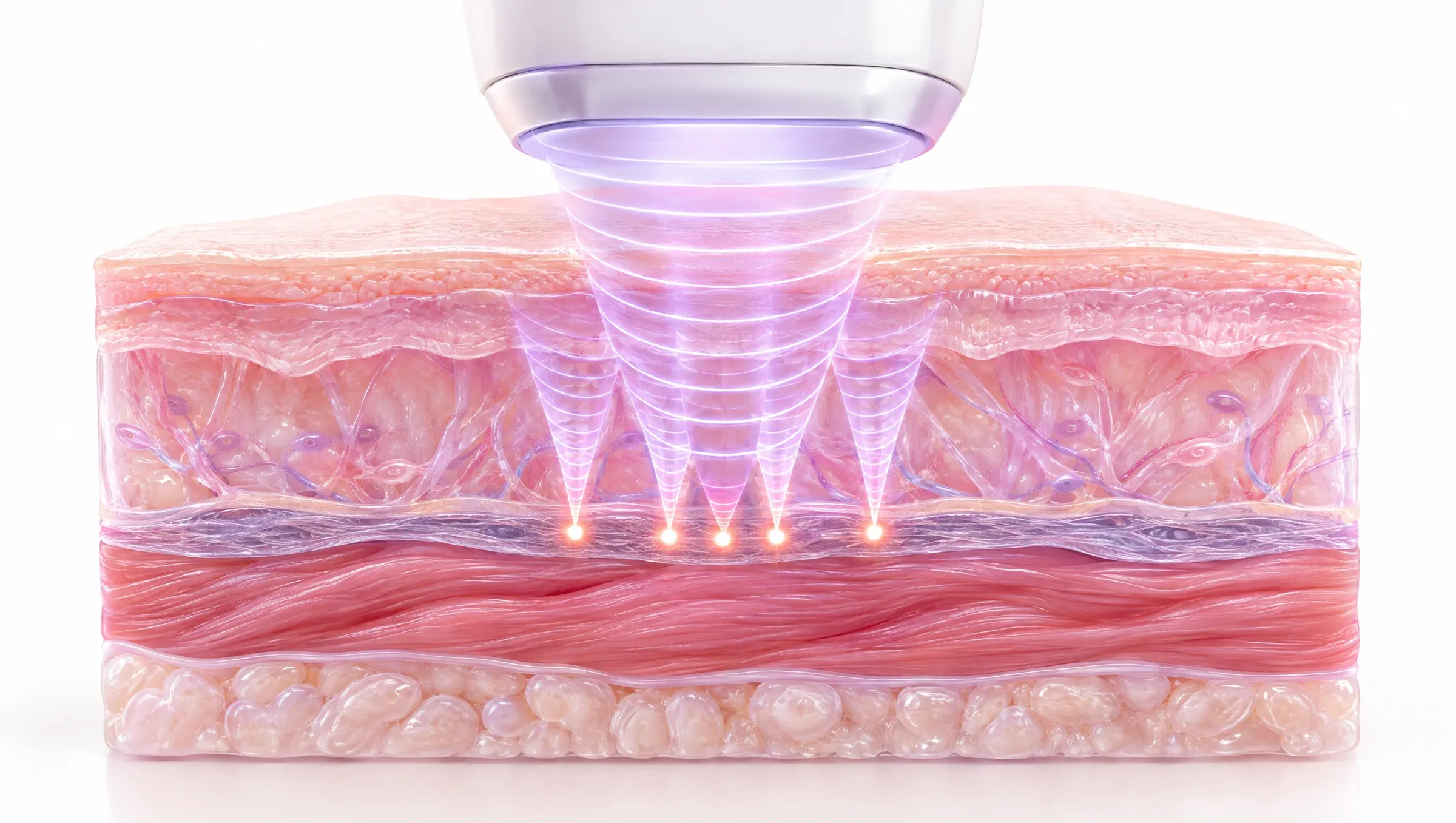
HIFU stands for high-intensity focused ultrasound. A handpiece focuses ultrasound energy to tiny points at fixed depths beneath the skin, much like a magnifying glass focuses sunlight. At each point the tissue heats briefly, while the skin surface stays intact.
Different cartridges reach different depths, typically around 1.5, 3 and 4.5 millimetres. The deepest reaches the SMAS, the fibrous support layer that surgeons tighten in a facelift. The body responds to the tiny heated points by making new collagen and tightening existing fibres.
Who it suits
- Mild to moderate loosening along the jawline, under the chin, cheeks and brows.
- People who want gradual firming without surgery or downtime.
- Often people in their thirties to fifties, though skin quality matters more than age.
It is less suitable for marked sagging or heavy jowls (surgery gives a bigger lift), or for very thin skin with little underlying tissue. If volume loss is the main issue, fillers may help more. A dermatologist will assess which changes are driving how your face looks.
The session
- The skin is cleaned and the treatment lines are planned.
- Numbing cream may be applied.
- The handpiece is placed on the skin and delivers lines of energy, area by area, at the planned depths.
- A full face and neck usually takes around an hour, depending on the areas.
You may feel deep warmth and brief prickly twinges, especially over the jawline and bony areas.
Afterwards
- Mild redness, swelling or tenderness for a few days is common; some people feel numbness or tingling briefly.
- You can usually return to normal activities straight away.
- Sun protection and a gentle routine are all the aftercare most people need.
When results show
There can be a slight immediate tightening, but the real change comes from new collagen, which builds over two to three months and continues improving for a while after. Results are gradual and natural-looking, which is part of the appeal, and they vary from person to person.
How long it lasts
Collagen made after HIFU typically lasts many months. Because ageing continues, many people choose a maintenance session about once a year. Combining HIFU with sun protection, a good skincare routine and, where suitable, radiofrequency or skin boosters helps maintain results.
HIFU or radiofrequency?
Both use heat to build collagen. HIFU focuses energy at deeper, precise points and is good for lifting and contouring; radiofrequency heats the skin more broadly and evenly and is good for overall firmness and texture. They are often combined. See RF skin tightening.
The honest summary
HIFU is a useful, low-downtime way to firm mild to moderate laxity, with gradual results that look like you on a good day. It does not replace a facelift for marked sagging. Read more on our HIFU page, or about non-surgical facial rejuvenation.