Most of what makes hair look healthy is avoiding damage to the hair shaft, which is dead tissue and cannot heal itself. These seven habits do most of the work.
1. Wash gently, as often as your scalp needs
Shampoo is for the scalp; let the lather run through the lengths. Oily scalps may need daily washing; dry ones less. Use lukewarm water. Our own Daily Care Shampoo is one gentle option for everyday washing, including colour-treated hair; any mild shampoo that suits your scalp does the same job.
2. Condition the lengths, every time
Conditioner smooths the hair cuticle, reduces tangling and breakage, and protects hair from friction. Apply to the mid-lengths and ends, not the scalp.
3. Oil the lengths, not an oily scalp
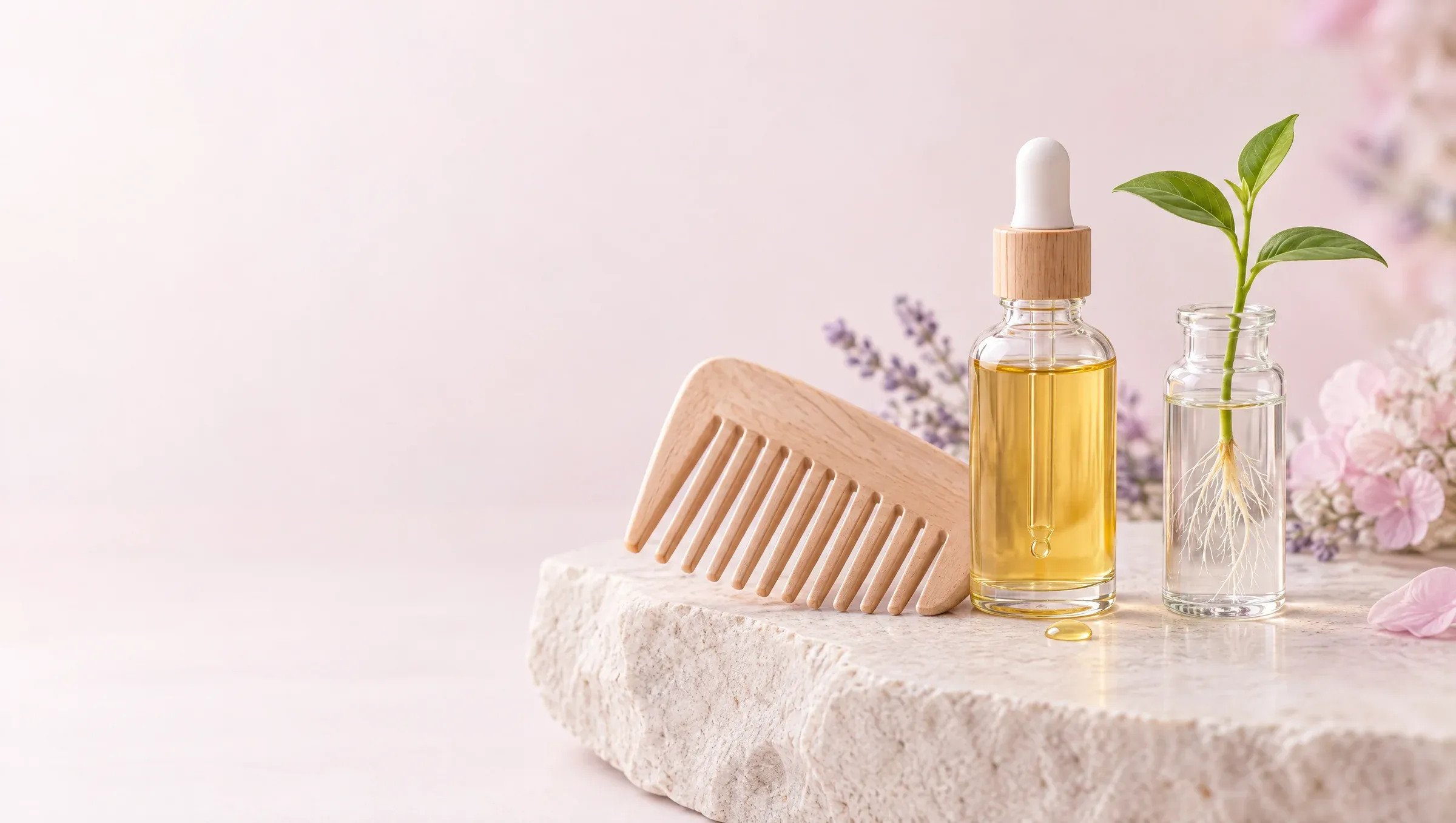
Oil on the lengths can reduce breakage and add shine. On a scalp prone to dandruff, heavy oiling can make flaking worse. There is no good evidence that oil itself makes hair grow. If you like oiling dry lengths and ends, any light oil works, such as our Nourishing Hair Oil; keep it off the scalp if you get dandruff. See our guide to oily scalp and dandruff.
4. Turn the heat down
Hair dryers on high, straighteners and curling tongs damage the hair’s protein. Air-dry when you can, use a heat protectant, keep tools at the lowest effective temperature and avoid daily use.
5. Be kind with styling
Tight ponytails, buns and braids pulled the same way every day can cause traction hair loss at the hairline. Vary styles, loosen them, and use soft hair ties. Detangle wet hair gently with a wide-toothed comb, starting from the ends.
6. Feed your hair
Hair follicle cells are among the fastest-dividing cells in the body. Low iron, vitamin D, vitamin B12 or protein, crash diets and thyroid problems can all show up as shedding. A balanced diet matters more than biotin supplements, which help only if you are deficient.
7. Take care of the scalp
Treat dandruff with a medicated shampoo, protect a thinning parting from strong sun, and do not ignore a persistently itchy, scaly or painful scalp.
When to see a dermatologist
- Shedding that is clearly more than usual for more than two or three months.
- A widening parting, a receding hairline or thinning crown.
- Patches of hair loss.
- Hair fall with scalp pain, redness or scaling.
Hair fall almost always has a cause that can be found, and treatment works best early. See hair fall, hair fall treatment and PRP for hair.