
The two vertical creases between the eyebrows are so common they have a nickname. In English they are the 11 lines; doctors call them glabellar lines or frown lines. They can make you look cross or tired when you feel neither, and they are one of the most common reasons people in Rajkot ask us about Botox. Here is what is happening under the skin, what treatment can and cannot do, and how safe it is.
Why 11 lines form
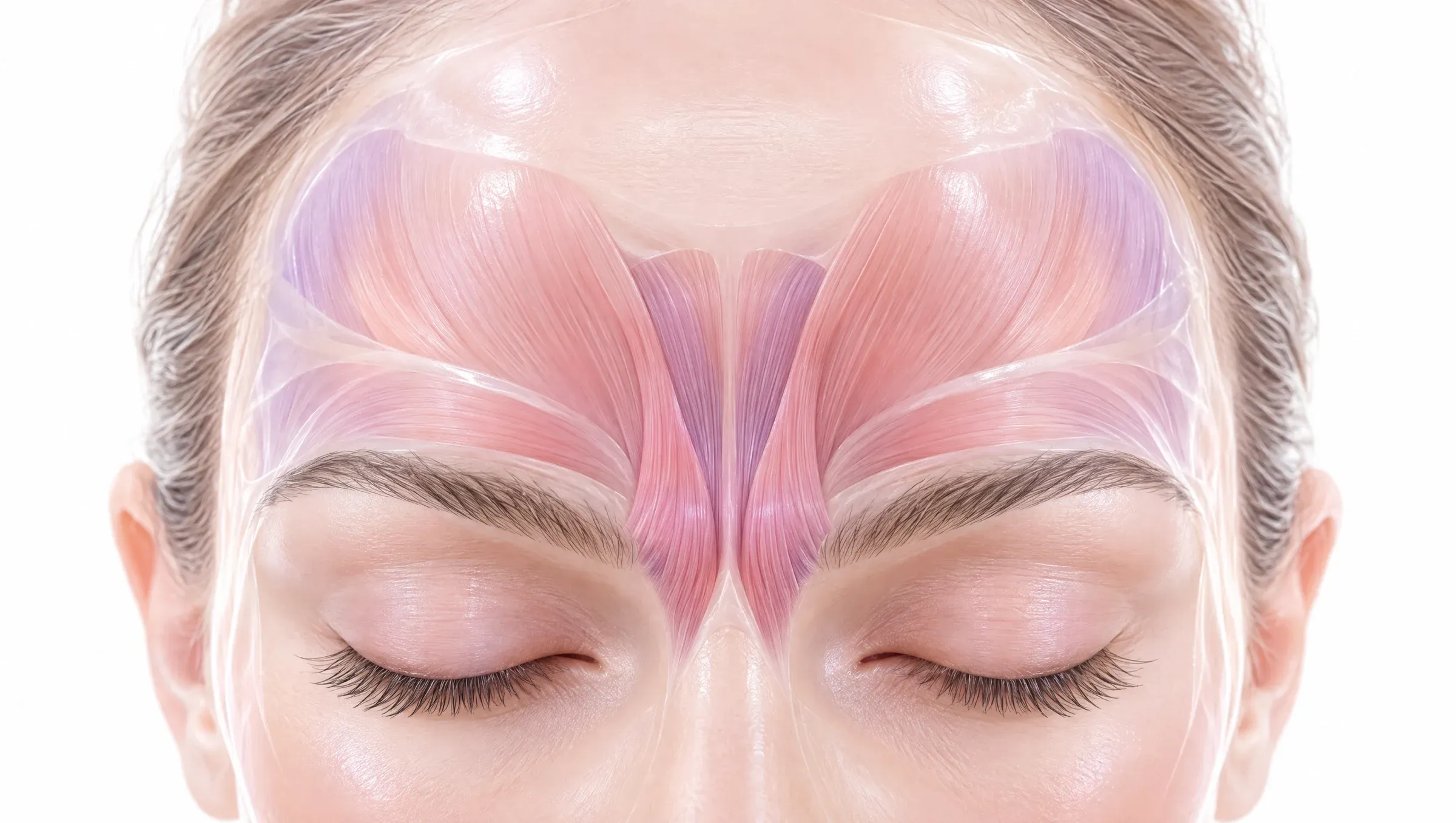
Between your brows sit two small muscles that pull the brows together and down (the corrugators) and one that pulls the skin between them downwards (the procerus). Every frown, squint in the sun, or moment of concentration at a screen folds the skin there.
When you are young, the skin springs back. Over the years, collagen thins, sun exposure adds up, and the fold starts to stay. That gives two kinds of 11 lines:
- Dynamic lines show only when you frown and vanish when your face is relaxed.
- Static (etched) lines are still there when your face is still. They began as dynamic lines and have creased into the skin.
This difference matters more than anything else in deciding what will help.
How Botox softens them
Botox is the best-known brand of botulinum toxin type A. Injected in tiny amounts into those frown muscles, it temporarily blocks the nerve signal that tells them to contract. The muscles relax, so the skin above them stops folding, and the lines soften.
Only the injected muscles are affected. You can still raise your brows, smile and show expression; the aim is a face that looks rested, not frozen. The nerve signal gradually recovers, which is why the effect wears off.
For dynamic lines, this works well for most people. For etched lines, Botox stops the daily folding so the skin can slowly recover, but it does not fill a crease that is already there. Those lines usually improve more over two or three treatments, and some faces also benefit from skin boosters, a small amount of dermal filler or resurfacing.
Is it safe?
The 11 lines were the first cosmetic use of botulinum toxin to be studied and approved, and large trials go back to the early 2000s. In the main trials that led to approval, side effects were few and mostly mild. Looking at the realistic risks one by one:
| Side effect | How common | What happens |
|---|---|---|
| Small bruise or redness at a needle point | Common | Fades in a few days; make-up can cover it |
| Mild headache | Sometimes | Usually on the first day, settles on its own |
| Upper eyelid droop | Occasional (about 3 in 100 in the original trials) | Starts within two weeks and wears off over a few weeks |
| Brows feeling heavy | Sometimes | More likely if the forehead is also treated too strongly; a reason to dose carefully |
| Allergic reaction | Rare | Tell us about any reaction to a previous injection |
You may have read that botulinum toxin can spread and cause serious problems with breathing or swallowing. That warning is real for the much larger doses used to treat medical conditions such as muscle spasm. For the small doses used on frown lines, the official US prescribing information states that no definite serious cases of distant spread have been reported at the labelled dose.
What makes the biggest difference to safety is not the toxin itself but who injects it and with what:
- A doctor who knows facial anatomy places it in the right muscle, at the right depth, away from the eyelid-lifting muscle.
- A genuine, licensed product from a proper supplier. Cheap or unlabelled toxin is a real risk; ask what is being used.
- A record of the dose in your file, so the next treatment can be adjusted.
Who should not have it
Botox is not given if you are pregnant or breastfeeding, have an infection or active rash where it would be injected, have had a reaction to a botulinum toxin product before, or have a nerve or muscle condition such as myasthenia gravis. If you take blood thinners, tell your doctor; it usually means more chance of a bruise rather than a reason to avoid treatment. A big event coming up? Plan the treatment at least two weeks before it, so the result has settled and any top-up can be done.
What happens at the appointment
- Consultation. The dermatologist watches you frown and relax, looks at how strong the muscles are and whether the lines are dynamic or etched, and explains what is realistic. If Botox isn’t the right answer, you will hear that too.
- Treatment. After cleaning the skin, a very fine needle is used for a few small injections between and just above the brows. It feels like quick pinpricks and takes a few minutes; ice or numbing cream can be used if you like.
- Aftercare. Stay upright for about four hours, don’t rub or massage the area that day, and skip heavy exercise, facials and saunas until the next day. Normal work is fine.
What changes, week by week
- Days 1–3: little change. A tiny bump or pink spot at a needle point fades within an hour or so.
- Days 3–7: frowning becomes harder; the lines start to soften.
- Week 2: the full effect. This is the right time for a review and, if one side moves more, a small top-up.
- Months 3–4: movement slowly returns. Repeat when you want to; not more often than every three months.
Stopping is safe. When the effect wears off, the lines return to how they would have been; they do not become worse because you had Botox.
The short version
Botox for 11 lines is one of the most studied cosmetic treatments. In experienced hands, with a genuine product, it is low-risk for most healthy adults, and the side effect to know about, a temporary eyelid droop, affects about 3 in 100 people and wears off. It softens lines that come with frowning best; lines etched into resting skin need patience and sometimes other treatments too. For how we plan and dose it, see Botox & anti-wrinkle injections, and for other kinds of lines, our guide to wrinkles and fine lines.