
What vitiligo is
Vitiligo (often called safed daag, white patches) is a long-term condition in which the immune system mistakenly attacks melanocytes, the cells that give skin its colour. Where they are lost, the skin turns milky-white. It affects about one in a hundred people worldwide, all skin colours and both sexes, and often starts in childhood or young adulthood. It may run in families and is sometimes linked with thyroid disease and other autoimmune conditions.
Vitiligo is not infectious, not caused by food and not related to leprosy. It doesn’t affect general health, but it can affect confidence and how people are treated, especially on visible skin.
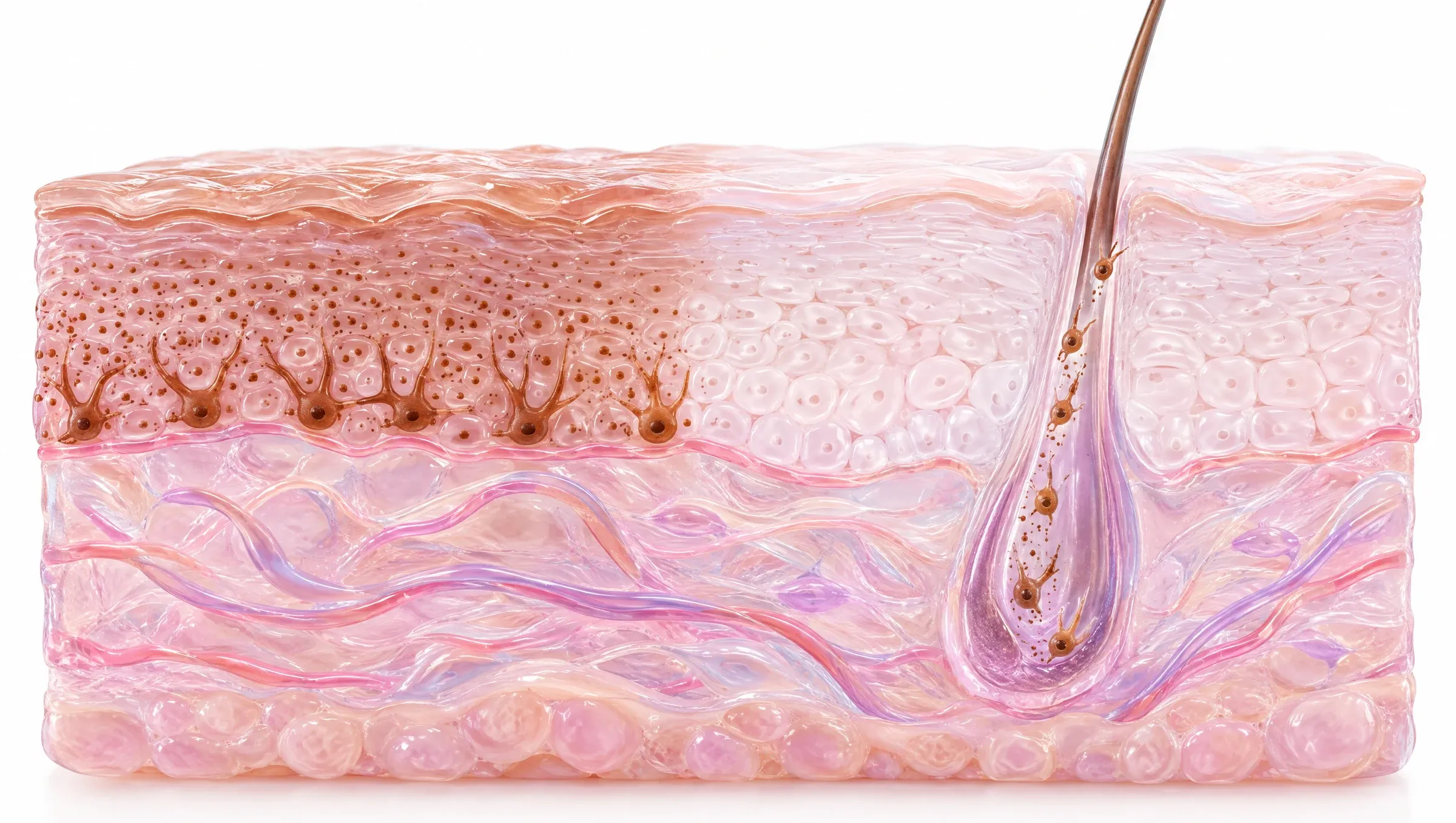
- Where pigment cells (melanocytes) are present, skin keeps its colour.
- Where the immune system has removed them, the skin turns milky-white.
- Pigment cells around hair follicles are often where colour returns first, as small dots.
Types of vitiligo, and look-alikes
Both sides (common type)
- Looks like
- Milky-white patches on both sides of the body, often on the hands, fingers, around the eyes and mouth, elbows, knees and feet.
- Course
- Can stay stable for long periods or spread in phases, sometimes after stress, illness or skin injury.
- Treatment
- Creams, phototherapy and, when spreading, tablets to stabilise it; grafting for stable patches.
One side only
- Looks like
- Patches on one side of the body or face, often in a band, sometimes with white hair.
- Course
- Usually spreads for a year or two, then stops. It often starts in childhood.
- Treatment
- Early creams and light treatment; once stable, it often responds well to grafting.
Single patch
- Looks like
- One or a few small white patches in one area.
- Course
- Many stay small; some later develop into the common type.
- Treatment
- Creams and targeted light treatment; watch for new patches.
Look-alikes
- Looks like
- Lighter, off-white or slightly scaly patches rather than milk-white: for example pityriasis alba in children, a yeast infection (tinea versicolor) or marks after eczema.
- Course
- Usually temporary and very treatable.
- Treatment
- Depends on the cause: moisturisers, antifungal treatment or treating the eczema. Not every white patch is vitiligo.
Illustrations, not to scale. A dermatologist confirms vitiligo, often with a Wood’s lamp, and checks whether it is stable or active.
Treatment options, in general
Treatment aims first to stop new patches and then to bring back colour. Dermatologists choose from:
- Creams: anti-inflammatory creams such as steroids or calcineurin inhibitors, and newer JAK-inhibitor creams where available.
- Phototherapy: narrowband UVB light, either to the whole body or targeted (excimer) to small patches, usually two or three times a week for months.
- Tablets: short courses to stop rapidly spreading vitiligo.
- Surgery (grafting): for patches that have been stable for at least a year, pigment cells are moved from normal skin into the white patch.
- Camouflage: make-up or self-tanners designed to match skin tone, for confidence while treatment works.
Repigmentation is slow, and patience over many months matters. The face and neck respond best; hands, feet and lips are slower.
Living with vitiligo
- Protect white patches from sunburn with sunscreen and clothing; burnt skin can trigger new patches.
- Avoid friction, tight clothes and cuts where possible, as skin injury can trigger patches.
- Eat a normal, balanced diet; food restrictions don’t help.
- Talk about it: support from family, friends and patient groups makes a real difference.
When to see a dermatologist
See a dermatologist when you first notice white patches, when new patches appear or existing ones grow, or before trying any herbal or unproven treatment. A thyroid check may be suggested.
How OrnaSkin helps
At OrnaSkin, a dermatology consultation confirms the diagnosis, checks whether vitiligo is stable or active and plans treatment with creams and medicines. If phototherapy or grafting would help, the dermatologist explains how and where it can be arranged.