
Two common, long-term skin conditions
Psoriasis is an immune condition in which skin cells are made far faster than normal, so they pile up as thick, red, scaly patches, typically on the elbows, knees, scalp and lower back (scalp psoriasis is often mistaken for stubborn dandruff). It can also affect the nails and joints. It often runs in families and tends to come and go over life.
Eczema (dermatitis) is a group of conditions in which the skin barrier is weak and the skin reacts easily, becoming dry, itchy, red and rough. The most common type, atopic eczema, often starts in childhood and is linked with asthma and hay fever; contact dermatitis is a reaction to something that touches the skin.
Neither is infectious, neither is caused by poor hygiene, and both can be controlled well with the right plan.
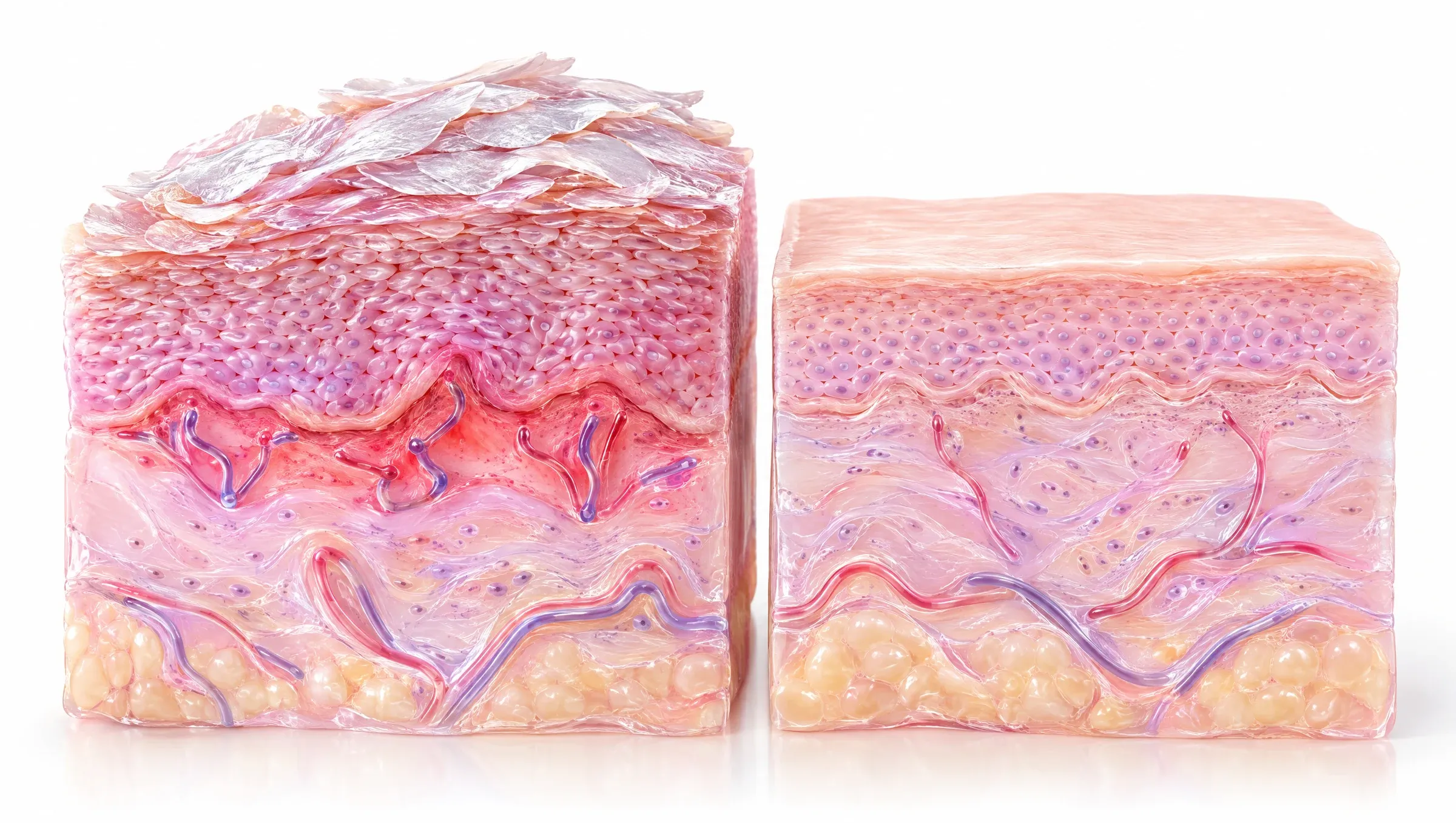
- In psoriasis, new skin cells are made far faster than normal.
- They pile up at the surface as thick, scaly patches.
- Inflammation beneath makes the patches red.
Which rash is it?
Several red, scaly or itchy rashes look alike, but they need very different treatment.
Psoriasis
- Looks like
- Thick, raised, well-defined red patches with silvery-white scale, often symmetrical.
- Where
- Elbows, knees, scalp, lower back, nails; sometimes palms and soles.
- Itch
- Mild to moderate.
- Usually treated with
- Creams (steroids, vitamin D analogues), scalp treatments, phototherapy and tablets or injections for extensive disease.
Eczema
- Looks like
- Dry, rough, red patches with blurred edges, sometimes tiny blisters or oozing; skin thickens with scratching.
- Where
- Elbow and knee creases, neck, hands, face; in babies, cheeks and outer arms.
- Itch
- Often intense, worse at night.
- Usually treated with
- Thick moisturisers every day, anti-inflammatory creams during flares, and avoiding triggers; newer medicines for severe eczema.
Contact dermatitis
- Looks like
- Red, itchy, sometimes blistered rash with a sharp outline matching what touched the skin.
- Where
- Under a watch strap or jewellery (nickel), at a hair-dye line, on hands from detergents or cement.
- Itch
- Moderate to severe.
- Usually treated with
- Identifying and avoiding the trigger, short courses of creams, and barrier care.
Ringworm (fungal)
- Looks like
- Ring-shaped red patches with a scaly, raised edge and clearer centre that spread outwards.
- Where
- Groin, waist, buttocks, under the breasts, and other sweaty, covered areas.
- Itch
- Usually intense.
- Usually treated with
- Antifungal creams and tablets for the full course. Steroid creams make it worse.
Illustrations, not to scale. Please don't self-diagnose; a dermatologist can usually tell these apart by examination, sometimes with a simple skin scraping.
What triggers flares
Psoriasis: stress, infections such as a sore throat, skin injury (new patches can appear on scratches), smoking, alcohol, weight gain, cold dry weather and some medicines.
Eczema: dry air, hot showers, soaps and detergents, sweat and heat, rough fabrics like wool, dust mites, stress and, for some, specific allergens.
Living with psoriasis or eczema
- Moisturise generously every day, even when the skin is clear, ideally right after bathing.
- Use lukewarm water and soap-free cleansers; pat skin dry.
- Wear soft cotton clothing and keep nails short.
- Use prescribed creams as directed, including when to step down, rather than stopping and starting.
- Look after general health: weight, exercise, not smoking and limiting alcohol help psoriasis.
- Don’t buy steroid or combination creams over the counter.
When to see a dermatologist
See a dermatologist if you have a red, scaly or itchy rash that lasts more than a couple of weeks, keeps coming back, is spreading, affects sleep, or isn’t responding to creams; if you have psoriasis with joint pain or swelling; or if you are unsure whether a rash is eczema, psoriasis or a fungal infection. An itch that is worse at night and shared by several people at home suggests scabies instead.
How OrnaSkin helps
At OrnaSkin, a dermatology consultation confirms the diagnosis and sets up a long-term plan with creams, medicines and skincare, with follow-ups to step treatment up or down. If phototherapy (UV light treatment) would help, the dermatologist explains how and where it can be arranged.